
When illustration work starts feeling too isolated
Many illustrators reach a point where the work is good but the process gets stuck in one room. Maybe you are building picture books in Braamfontein, creating editorial art in Pretoria, or handling packaging concepts for a small food label in Durban. The challenge is not only getting paid, it is getting seen by art directors, publishers, brand teams and other makers who understand the value of original work.
For this use case, the client situation is usually mixed. You may need stronger portfolio positioning, clearer rates, better image presentation, and a way to talk about your process without underselling it. Some illustrators are balancing tablet work with hand-drawn scans, while others are still setting up a practical studio corner at home. That is where a grounded community matters, especially when power cuts, tight deadlines and client revisions all hit at once.
- Picture book artists who need page flow feedback
- Editorial illustrators pitching to magazines and newspapers
- Packaging artists preparing cleaner files for print
- Digital illustrators looking for regional collaboration
Typical equipment illustrators bring to the work
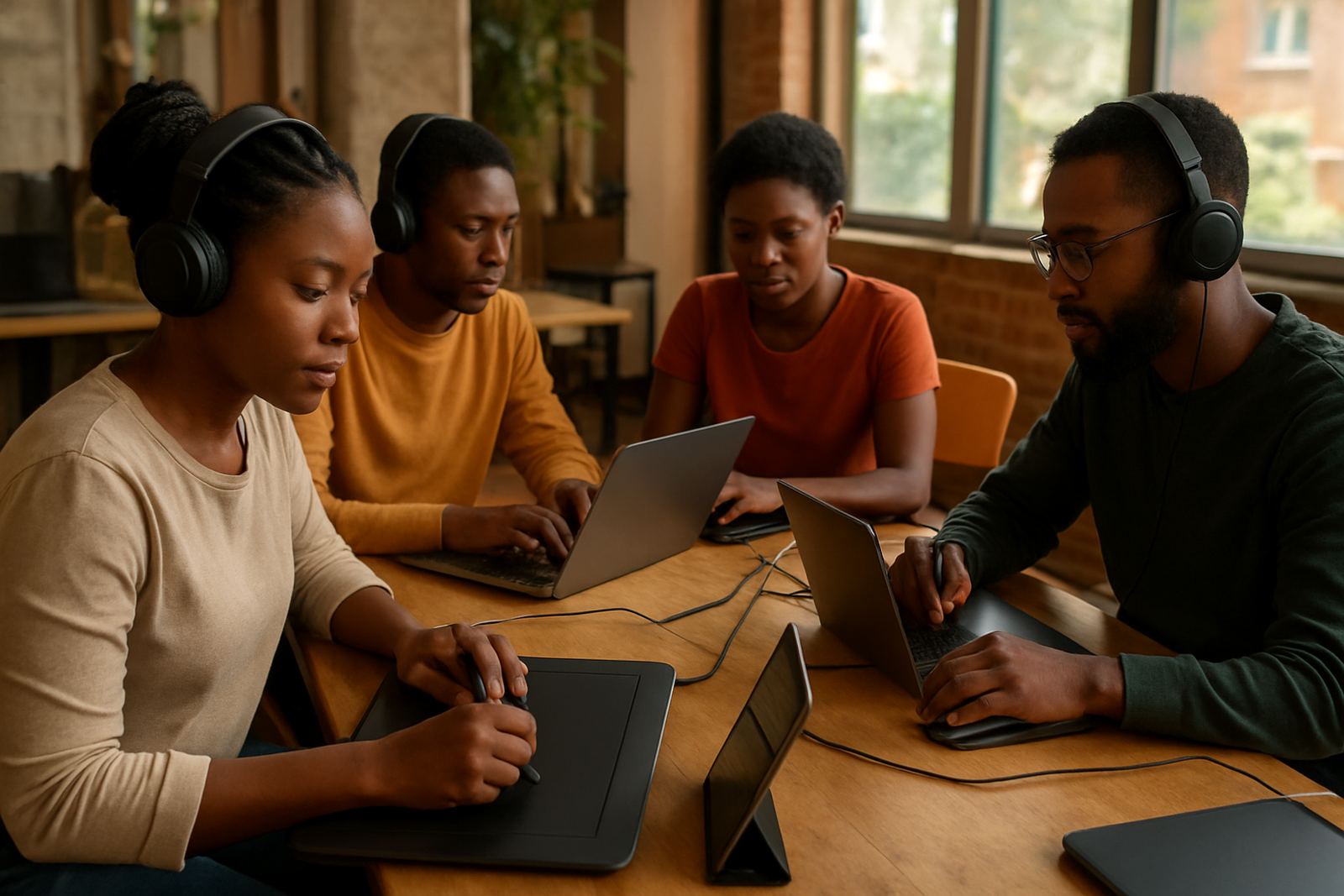
Most illustrators do not need fancy gear, but they do need reliable tools that match the way they work. In our sessions, people often compare simple setups and learn where to spend first. A useful kit for illustration work can be built around one main drawing tool, one backup method and a solid way to capture or export final artwork.
- Drawing tablet or pen display, with spare nibs and a stable stand
- Laptop or benchtop with enough memory for layered files
- Scanner or a good camera setup for hand drawn work
- Colour-calibrated monitor if you do print or packaging jobs
- External hard drive and cloud backup for finished files
- Basic lighting for photographing sketchbooks, samples and mockups
If you are handling print work, you also need to think about resolution, bleed, trim and file size. For editorial spreads, the art may need to sit neatly around copy. For packaging, dielines and panel sizes matter. For digital campaigns, the same artwork may need to be cropped several ways without losing detail. A good creator set-up keeps those needs in mind from the start, not at midnight before handover.
How to plan an illustration portfolio that gets reviewed properly
A portfolio for illustrators should show range without looking scattered. One strong way to plan it is by use case rather than by style alone. That means arranging work under clear groups such as editorial, publishing, packaging, character work or social media campaigns. This helps a viewer understand where you fit, and it saves them from guessing what kind of briefs you want.
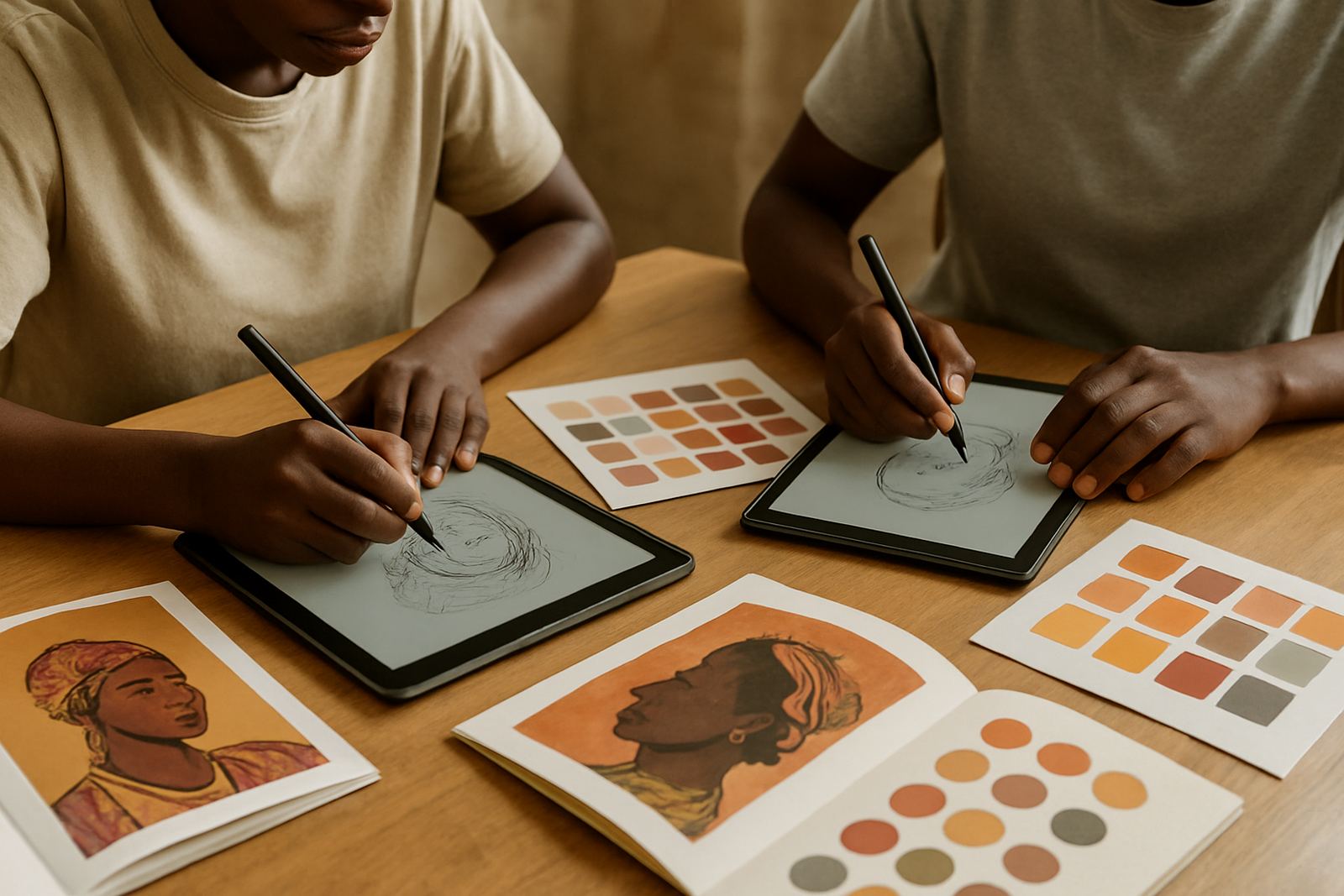
For online sessions and showcase prep, we often advise people to keep a tight selection of finished work and a smaller set of process images. Art directors want to see final quality, but they also want to know how you solve problems. A rough thumbnail, a colour study or a spread of early drafts can say a lot about your thinking.
- Lead with 8 to 12 of your best pieces, not everything you have ever made
- Group work by category so clients can scan quickly
- Include one or two short notes on brief, medium and turnaround time
- Show at least one project that proves you can work to print specs
- Keep file names clean and simple for easy sharing
Common mistakes illustrators make before pitching
One of the most common mistakes is sending work that looks finished but does not answer the brief. A beautiful image can still miss the mark if the target audience, format or file requirements are unclear. Another issue is pricing too low just to get the job, then finding out the artwork needs extra rounds of revision, licensing discussion or artwork resizing.
Another trap is mixing personal sketchbook pieces with client-ready samples without making the difference clear. Buyers are not always looking for the same thing you enjoy making after hours. They need proof that you can meet a deadline, follow layout instructions and deliver files that fit the job. In short, your portfolio needs to make the client feel safe and informed.
- No print-ready examples in a portfolio aimed at publishers or packaging teams
- Overcrowded layouts that make the work hard to scan
- Unclear pricing for usage, revisions and rush turnarounds
- Low-resolution images that look fine on a phone but fail on a monitor
- No backup plan for load-shedding or internet interruptions
Budget ranges that make sense for working illustrators
Budget planning depends on where you are in the work cycle. A new illustrator may start with a modest setup and grow from there, while a working studio needs better backup systems and print support. In Rand terms, a practical entry setup for digital illustration can sit between R8,000 and R20,000 if you already have a basic laptop. If you need a stronger machine, budget around R18,000 to R35,000 depending on screen size, memory and storage.
For print support, a reliable scanner, monitor calibration and backup drive can add another R4,000 to R12,000. If you are setting up for product photography or sample styling, allow R2,500 to R8,000 for lights, stands and simple props. The key is to spend where it affects delivery first. A stable device, backup power for short outages and proper file storage will usually help more than a full shelf of extras.
For pricing your own services, a simple project may start from R1,500 to R5,000 for smaller pieces, while editorial spreads, packaging artwork or repeat campaign usage can move into much higher brackets depending on rights and complexity. If the project includes multiple revisions, licensing or a tight deadline, the fee should reflect that. Too many illustrators quote for drawing time only, then absorb the rest for free.
Why illustrator communities matter across South Africa and the continent
Illustration work grows faster when people can compare notes with others who face the same realities. In Braamfontein, Rosebank, Soweto or Newtown, creators often need more than admiration from a distance. They need local conversations about rates, file setup, client handover and how to keep producing during load-shedding or travel-heavy weeks. That is true in Cape Town and Durban too, and it is just as relevant for Nairobi-based creators joining online.
PioCreat Africa brings illustrators into meetups, showcases, mentorship circles and collaboration calls that make the work more visible and more practical. Whether you are refining a children’s book sequence, preparing packaging samples or looking for a partner on a mixed-media project, the value is in real exchange. People share contacts, critique honestly and make room for African-made work to travel further.
- Braamfontein Chapter for central Johannesburg creators
- Pretoria Chapter for artists working with agencies and institutions
- Cape Town Chapter for print, publishing and product creatives
- Durban Chapter for designers balancing studio and market work
- Nairobi Chapter for cross-border collaboration and online sessions