When a fashion label needs more than sewing space
Designers and small labels often reach a point where the garments are coming together, but the business side is still messy. Maybe the fit is strong, the samples are ready, yet the pricing is guesswork, the brand story is unclear, or the collection has not been seen by the right people. That is where a creator community helps. In Braamfontein and beyond, fashion makers use PioCreat Africa to connect with other African creatives, share work, and get honest feedback before they spend money on a full production run.
This is especially useful for labels working across Johannesburg, Pretoria, Durban, Cape Town and Nairobi, where buyers, pop-ups and content needs can differ quite a bit. A fashion maker may need help with lookbook direction, product styling, showcase planning or simple market readiness. It is not only about making clothes, it is about getting the collection ready for the room it will be shown in.
Typical equipment and tools for a fashion maker setup
Most fashion makers do not need a massive studio to get started, but they do need reliable equipment and a clean way to move from sketch to finished sample. If your setup is small, every item must earn its place. Load-shedding, space constraints and coastal humidity can all affect how you store fabric, press garments and protect finished pieces.
- Sewing machine and overlocker for sample making and finishing
- Cutting table or large flat surface with accurate measuring tools
- Dress form or mannequin for fitting and draping
- Steam iron and pressing board for clean finishing
- Fabric storage racks or sealed containers for rolls and offcuts
- Basic photography kit for product shots and lookbooks
- Labels, tags and packaging materials for small batch sales
For accessory makers, the set may also include hole punches, rivet tools, bag hardware, moulds or specialist hand tools. A good light source is important too, especially if you are shooting content after hours or during load-shedding. Natural light is great, but it is not always available when the timeline says otherwise.
How to plan a small fashion workspace that actually flows
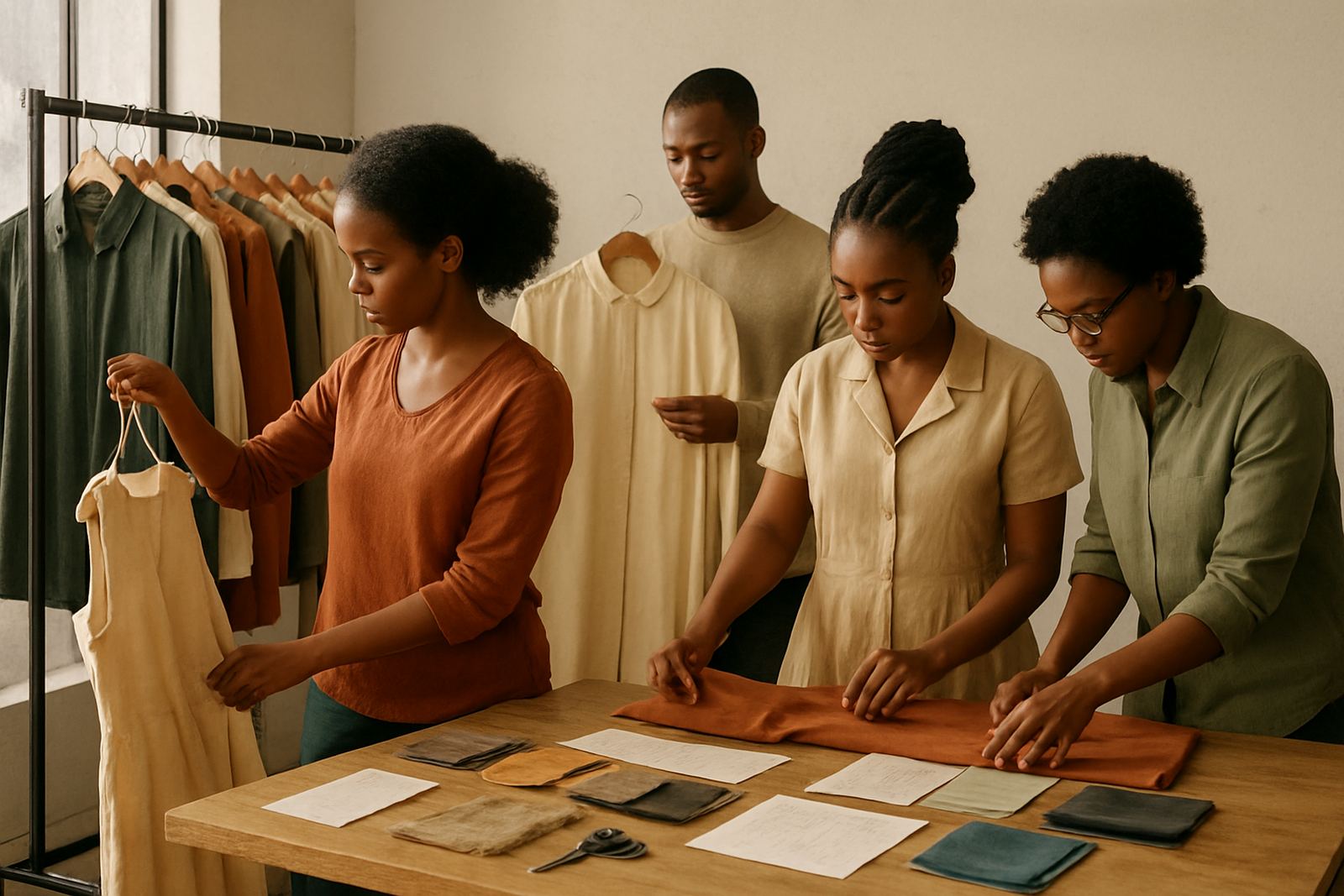
The best layouts keep cutting, sewing, pressing and packing in a straight line as much as possible. If you are always walking back and forth between tools, the process slows down and mistakes creep in. In a shared studio, the priority is keeping fabric clean, moving safely around sharp tools, and storing samples so they do not get crushed or marked.
For fashion makers working from home, a spare room, garage or compact studio in Braamfontein can work well if the zones are clear. One area for pattern work, one for sewing, one for finishing, and one for packing is usually enough. Even a 12 to 20 square metre room can be practical if you use vertical storage and keep the floor clear.
- Place the cutting surface near natural light where possible
- Keep irons and pressing tools close to the sewing station
- Store fabric by season, colour or collection so sourcing is quicker
- Separate clean finished items from work in progress to avoid damage
- Leave enough room for fittings, because rushed fitting sessions lead to costly remakes
Common mistakes that cost fashion labels money
One of the biggest mistakes is underpricing. A small label may count fabric and thread but forget labour, transport, packaging, styling and rejected samples. Another common problem is making too many pieces before testing the fit or demand. It feels productive, but it can leave you with stock that sits for months.
Some labels also overlook the practical side of showing work. If the garment photographs poorly or the collection is not grouped properly, buyers struggle to understand it. You need clear sizing, accurate colour matching and a simple system for naming products. Miss one of those pieces and the whole thing starts feeling harder than it should be.
For fashion makers in South Africa, the other common issue is not planning for local conditions. Humidity can affect natural fibres and storage, and power cuts can interrupt pressing, charging and digital work. A backup plan saves time and stress, even if it is only a simple inverter, a battery light or a printed production checklist.
Budget ranges for a fashion maker in rand
Budgets vary a lot depending on whether you are building a side-hustle studio or a label preparing for retail and showcases. The figures below are broad working ranges, but they help when planning a first setup or a refresh before a market, pop-up or mentorship review.
- Starter sample-making setup: R15 000 to R35 000
- Small serious studio with pressing and storage: R35 000 to R85 000
- Collection prep, content and showcase support: R8 000 to R30 000 per cycle
- Photography, styling and product presentation: R5 000 to R20 000
If you are adding hardware, specialist cutting tools or extra storage, the total can climb quickly. Fashion makers working with mixed textiles should also budget for offcuts, repairs and waste, because those hidden costs often get ignored. Better to plan for them upfront than scramble later.
What PioCreat Africa can help fashion makers do
Fashion makers often need a mix of creative support and practical introductions. That might mean portfolio feedback before a showcase, mentor matching for pricing or production, or help finding collaborators for a capsule collection. It may also mean stronger creator photography, clearer product styling, and a better written profile that explains what your label makes and why it matters.
Through Braamfontein, Rosebank, Pretoria, Durban, Cape Town, Newtown, Soweto and Nairobi chapters, fashion creatives can join meetups, online sessions and collaboration calls that keep the work moving. The aim is simple: more useful contact, less noise. If your label is ready for new audiences, the right room can help you get there.