What the client needed in Melville
The client was a small arts and community team based in Melville, Johannesburg, working with a mix of independent illustrators, printmakers, zine makers and tabletop publishers. They wanted a showcase that would bring people in for the work first, not just for a social gathering, and they needed it to suit makers who travel with delicate stock, limited budgets and not much spare time for admin.
The ask included clear curatorial direction, a simple structure for stallholders, support for creator introductions, and a format that could work in a live room without pushing the space too hard. They also wanted the event to feel local to Joburg, with enough polish for first-time exhibitors and enough warmth for people who have been making for years. One constraint was that many participants were self-funded, so every Rand had to be accounted for.
- Audience: illustrators, printmakers, zine makers and self-publishing creators
- Location: Melville, Johannesburg
- Format: one-day showcase with short talks and open networking
- Goal: sales, visibility and stronger creator connections
The brief and the practical limits
The brief focused on three things: curation, flow and follow-through. Curation meant choosing the right mix of creators so the table offer felt varied but still coherent. Flow meant planning how people moved through the room, where conversations could happen, and how to avoid bottlenecks when the room got busy. Follow-through meant making sure exhibitors left with actual contacts, not just a photo and a tired voice.
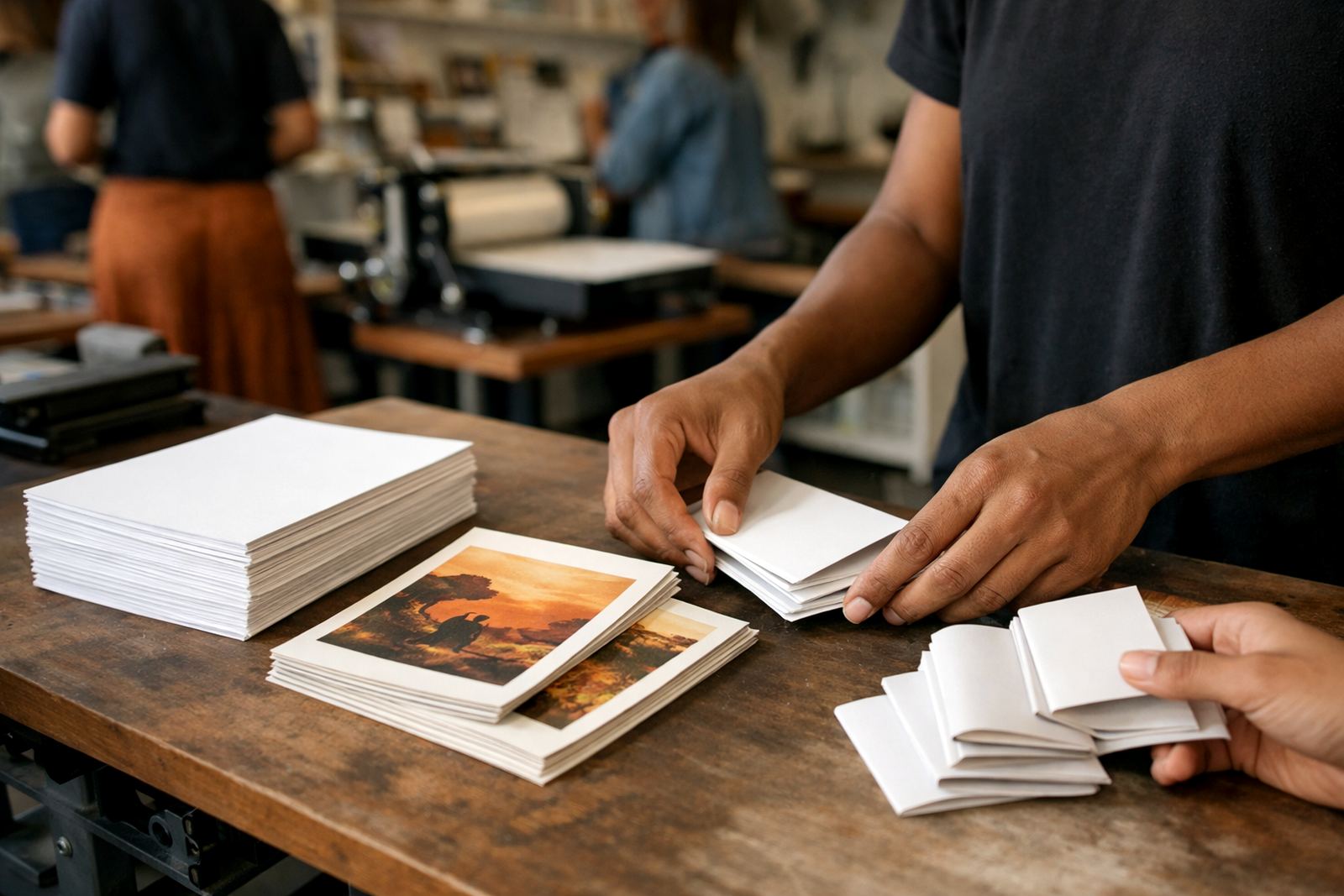
There were practical limits too. Some works were on paper, some were small-run books and some needed careful handling because of ink, foil or unbound pages. The team also had to work around load-shedding risk, so the room plan could not depend on perfect power. We kept the setup light, used hand-held elements where possible and made sure the schedule could carry on if the power dropped for a bit. That sort of planning matters in Johannesburg, where a good room can change quickly.
- Limited stall budgets and variable stock volumes
- Power interruptions and no reliance on heavy AV
- Need for easy set-up and pack-down within one day
- Requirement for a calm, maker-friendly atmosphere
What we supplied and how it was shaped
We handled showcase curation, creator profile writing, portfolio feedback for selected exhibitors, collaboration facilitation and event production planning. The work started with a call for makers, then moved into selection, grouping and practical prep. We shaped the line-up so that similar work sat near each other without making the room feel repetitive, and we built short written profiles that helped visitors understand what each creator does in plain language.
We also supported the event floor plan, the run sheet, exhibitor communication and the way the room introduced the creators to one another. That included a simple sequence for opening remarks, table walk-throughs and a casual networking window. For the visual side, we arranged creator photography and product styling so the work could be captured cleanly without over-staging it. A zine table should still look like a working table, not a showroom pretending to be one.
- Showcase curation and exhibitor grouping
- Portfolio feedback and creator profile writing
- Creator photography and product styling
- Event production plan and run-of-show support
Timeline, from first call to showcase day
The project ran over 6 weeks from the first planning meeting to the event itself. Week one was the brief, venue checks and audience definition. Week two covered creator outreach and the first cut of participants. Week three was for confirmations, profile collection and the schedule draft. Week four was spent refining the floor plan, exhibitor notes and the public-facing copy. Week five covered final logistics, photography prep and timing checks. Week six was showcase week, with setup, delivery and post-event follow-up.
That timeline gave enough room to get the details right without losing momentum. It also allowed the team to follow up with creators who needed help tightening their table presentation or clarifying pricing before the day. For self-publishing work, that kind of lead time helps more than people expect. A clear list of what to bring, how much stock to prepare and where to place it can save a lot of stress on the day.
Results that mattered on the day
The event drew a focused crowd and gave the exhibitors proper visibility with buyers, peers and a few potential collaborators. The room felt busy but manageable, and the creators had space to speak about process, editions and pricing without shouting over the whole venue. Several participants reported direct sales on the day and useful follow-up conversations after it. More importantly, the room created a shared reference point for the local print and zine scene.
There was also a clear benefit in how the work was presented. Because the profiles and styling were handled carefully, visitors could move from one table to the next with a good sense of each creator’s practice. That made the showcase easier to navigate and gave newer makers a cleaner way to stand beside more established names. It was a small event in scale, but the contact made in that room carried some weight.
- Stronger visibility for participating creators
- Direct sales and post-event enquiries
- Better creator-to-creator introductions
- A practical model for future niche showcases
What we would do again for this kind of project
If we were doing a Melville zine and print showcase again, we would keep the same mix of tight curation and practical support. That balance worked. We would also keep the pre-event creator prep, because makers often benefit from a simple checklist on pricing, stock counts and display basics. It is easier to have those conversations before the doors open than to rush through them during setup.
For a project like this, the best result comes from treating the work as both cultural and practical. The creators need a fair platform, but they also need good timing, proper communication and enough room to sell. That is the part we would carry forward into any future edition, whether it stays in Melville or moves to another Joburg neighbourhood with the same energy.
- Keep the curator-led selection process
- Hold a short pre-event prep session for exhibitors
- Use simple written profiles to support each table
- Build in time for follow-up after the showcase
Key facts
| Project name | Melville Zine and Print |
|---|---|
| Project type | Niche showcase for illustrators, printmakers and self-publishing creators |
| Location | Melville, Johannesburg |
| Timeline | 6 weeks |
| Core services | Showcase curation, portfolio feedback, event production, creator photography, product styling |
| Outcome | Better visibility, direct sales and stronger creator connections |