
When your work is ready, but the market still cannot read it
Many jewellery designers reach a point where the making is in place, yet the story around the work is still too thin. You may have a small collection, good technical skill and a clear point of view, but buyers want to know what the pieces mean, how they are made, who they suit, and why the price sits where it does. That is where presentation matters as much as polishing cloth and pliers.
For designers in Braamfontein, Rosebank, Pretoria or further afield in Cape Town, Durban and Nairobi, the challenge is usually the same. You need a cleaner display, stronger product copy, better photography and a plan for showing your work to boutiques, galleries, concept stores and direct buyers without underselling yourself.
- Stated use case and material story for each collection
- Clear pricing structure for one-off pieces and small runs
- Simple display that suits markets, showcases and studio visits
- Buyer-facing content that explains care, size and wearability
The typical jewellery maker setup that needs tightening up
A workable jewellery setup does not have to be large, but it does need order. Most designers start with a bench, hand tools, a torch or heating setup, storage for findings and finished stock, and a phone or camera for product images. If you are working from a shared studio or a small workshop in Johannesburg, the biggest issue is often not the tools themselves but how they are arranged for safe work and quick packing on market day.
For showcasing and sales, the set-up usually needs a few extra items: neutral display stands, ring rolls, earring cards, a price list, packaging, repair notes and a small transport case. If you do live selling or pop-ups, a power bank, extension lead and a backup light help when load-shedding hits and you still need to photograph pieces or process orders after hours.
- Bench, seat, hand tools and finishing kit
- Display trays, bust forms, stands and earring cards
- Packaging, care inserts and spare labels
- Phone camera, small light and neutral backdrop
- Transport case for markets, collaborations and showcase days
How to plan a layout that helps the work sell
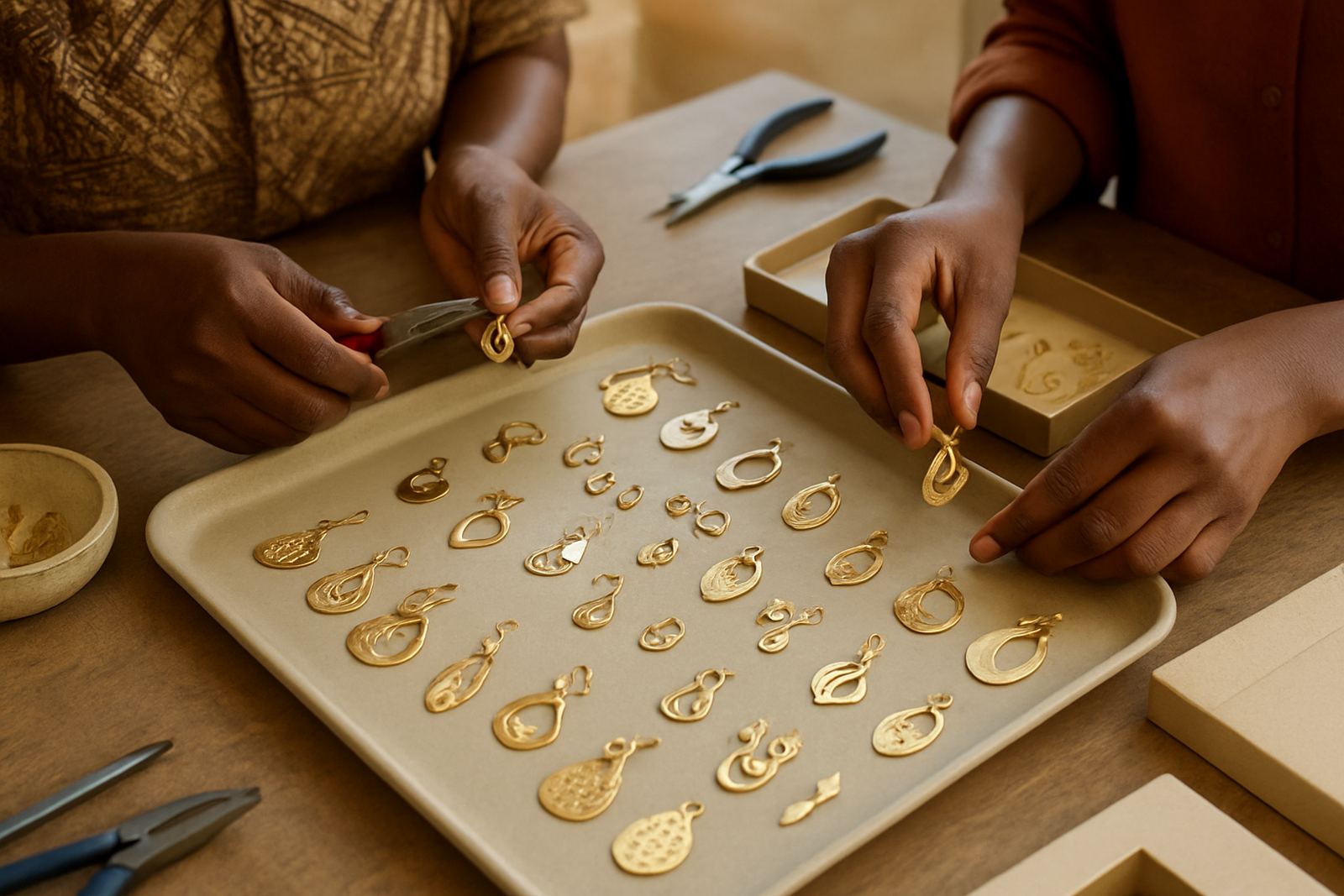
Jewellery is small, so layout has to do more than hold stock. It should guide the eye, separate collections and make it easy for a buyer to understand price bands. Start by grouping pieces by material, collection or intended wearer. Keep the strongest hero pieces at eye level and put the repeatable items where a buyer can compare them quickly. If everything is crowded together, the work looks cheaper than it is.
For showcase events and mentorship sessions, we often suggest a simple three-part plan: story, product, then proof. Story is the collection message. Product is the actual pieces, sizes and pricing. Proof is the maker profile, process notes or styling photos that show consistency. This kind of layout works whether you are presenting in a small venue in Newtown or online for a wider audience.
- Use a colour-neutral display so metals and stones stay readable
- Keep one category per tray or stand to avoid visual clutter
- Leave space between items so buyers can see detail properly
- Show size reference with worn images or scale notes
- Keep packaging close, but not in the way of the display
What buyers ask for and where designers lose the sale
Buyers for jewellery are usually asking practical questions before they ask about style. They want to know whether the piece tarnishes, how heavy it is, if the clasp holds, whether you can resize it, and how long reorders take. If your answers are unclear, the sale slows down. If the answers are ready, you look dependable and the piece feels easier to buy.
Common mistakes include pricing by guesswork, relying on one good photo, leaving out care instructions and not matching the display to the actual price point. Another problem is using too many styles in one collection, which makes the story hard to follow. A tight range of 6 to 12 pieces is often easier to pitch than a table full of unrelated stock.
- Unclear price structure between sample pieces and custom orders
- Photos that flatten texture, shine or scale
- No written care guidance for metal, beads or natural stones
- Too many one-off styles with no clear collection line
- Packaging that protects the item but says nothing about the maker
Budget ranges for better display and market access
You do not need a huge spend to improve your market readiness, but you do need a sensible budget. A basic refresh for a small jewellery designer can sit around R2 500 to R6 000, especially if you already have tools and only need better display, labels, packaging and a few product photos. A stronger showcase-ready setup, with proper styling support, content help and a cleaner display system, often lands between R7 500 and R18 000.
For designers preparing for multiple markets, buyer meetings or a pop-up season, it makes sense to budget separately for display materials, photography, transport and mentoring support. If you are working across cities like Pretoria, Cape Town or Durban, add in courier costs and a bit extra for replacement packaging because things do go missing or arrive bent if they are not packed well.
In our experience, the best spend is usually not on more stock. It is on making the current range easier to understand and easier to buy. That is what turns a talented maker into a clearer retail partner, and it helps when you are trying to move from occasional sales into more consistent orders.
How PioCreat Africa supports jewellery designers
PioCreat Africa works with creators who need practical support, not empty talk. For jewellery designers, that can mean portfolio feedback, mentor matching, creator profile writing, showcase curation, product styling, collaboration facilitation and online session hosting. The point is to help you present your work in a way that reflects the skill already in the pieces.
Our community spans Braamfontein, Rosebank, Pretoria, Durban, Cape Town, Newtown, Soweto and Nairobi, with online sessions for those working outside the main hubs. That means a designer in one city can still learn from another, meet possible stockists, or join a discussion on pricing and market readiness without having to travel every time.
If your jewellery is ready for more attention but the presentation still feels patchy, this is the kind of support that helps. The work stays yours. We just help make it clearer, easier to place and more confident in front of buyers.
What a useful first step looks like
A sensible starting point is to gather your current range, your pricing, your best photos and a short note on how the pieces are made. From there, we can look at the story, the display and the buyer fit. If your collection is still shifting, that is fine. The aim is to identify what can sell now and what should be held back until it is ready.
For many jewellery designers, one focused session is enough to spot the weak points: confusing naming, too many price points, poor display height or lack of care notes. Fixing those basics can change how the whole range is received. Small changes count here, and sometimes a neater table and a tighter story make all the differnce.