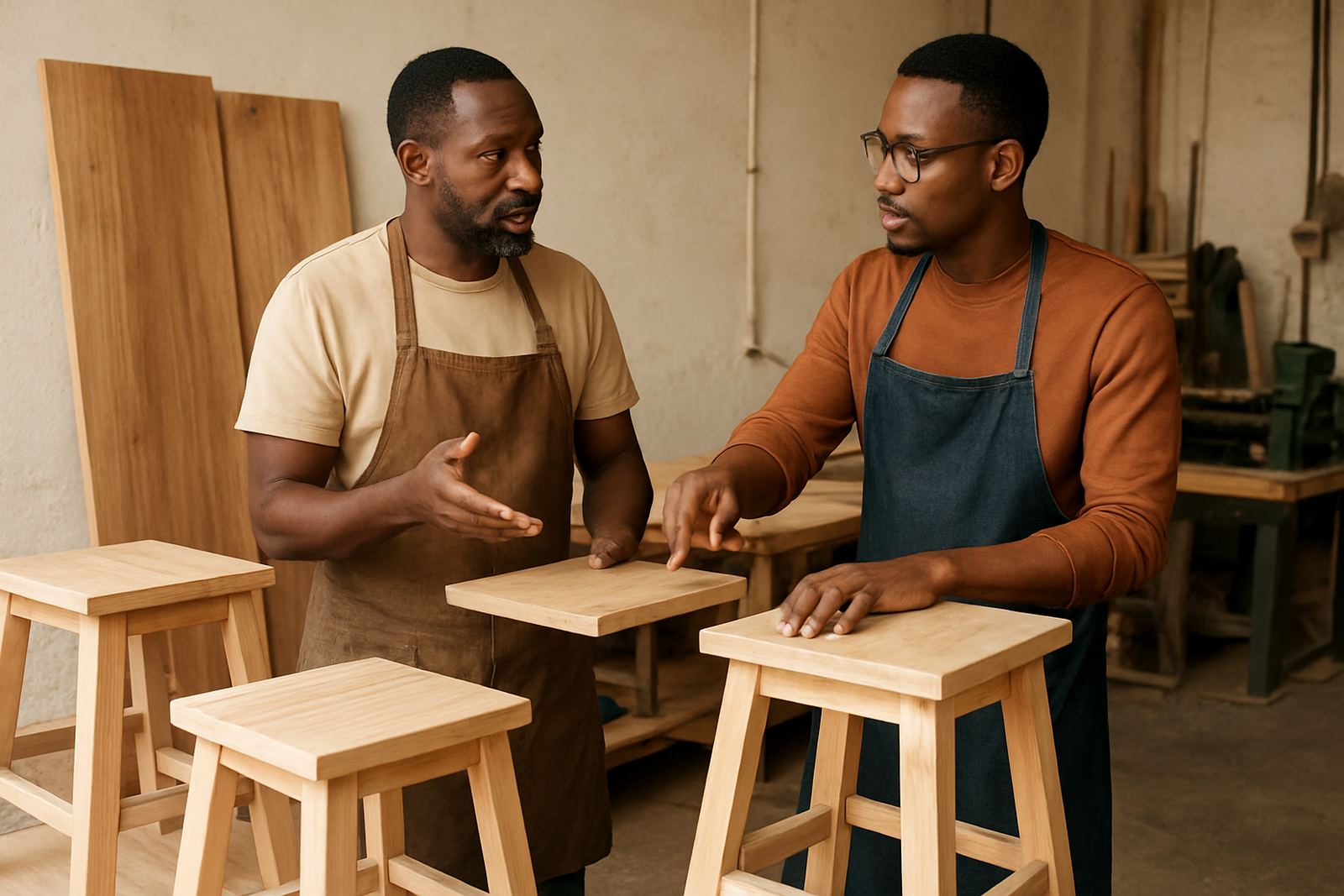
What furniture builders need before they scale
Furniture builders often start with a few repeat jobs, a garage or small workshop and a hand full of tools. Then the work shifts into custom dining sets, office pieces, reception counters, shelving and mixed material builds, and the pressure changes. Suddenly you need better quoting, reliable suppliers, cleaner finishing and a way to keep lead times under control.
For makers in Braamfontein, Pretoria, Durban, Cape Town, Nairobi and beyond, the real challenge is not only making the piece. It is managing timber costs, transport, installation, client changes and time on site. A good creator network helps you compare notes with other builders, learn what sells, and see how others handle small batches versus one-off commissions.
This use case suits furniture businesses that are trying to move from informal orders to repeatable production. If you are working with solid wood, ply, steel legs, upholstery partners or powder coated frames, you need people who understand the practical side of making and selling. That includes pricing support, portfolio feedback and introductions that can lead to partnerships, not just praise.
Typical workshop equipment for furniture production
The exact setup depends on your output, but most furniture builders need a balance of cutting, shaping, assembly and finishing equipment. A small workshop can do a lot with the right mix, as long as the layout supports safe movement and the power load is managed well during load-shedding.
- Cutting tools such as a table saw, mitre saw, circular saw and jigsaw for sheet goods and timber sections
- Shaping and edge tools such as a router, sander, planer and clamps in several sizes
- Assembly gear including drills, impact drivers, corner squares, jigs and workbenches at a comfortable height
- Finishing area with spray guns or hand-finishing tools, dust extraction and drying space away from heavy foot traffic
- Material handling items like trolleys, timber racks and offcut storage to keep stock organised
If you build mixed-material pieces, add metalworking support or partner with a fabricator for frames and brackets. Many South African makers also need backup power planning for chargers, lighting, small compressors and sanding equipment. Even a modest inverter setup can keep the workflow moving when the grid drops, but it must be matched to actual tool demand or it becomes an expensive headache.
How to plan the workshop layout so work flows properly
A furniture workshop works best when the space follows the sequence of the job. Material receiving should sit near storage, cutting should lead into assembly, and finishing should be separated from dust and open timber. If these stages overlap too much, you lose time cleaning, rechecking measurements and moving heavy pieces twice.
For a small shop in an urban area such as Johannesburg or Cape Town, the biggest wins come from simple planning. Keep sheet stock flat and dry, leave enough turning space for long pieces, and make sure finished items can be packed without scraping fresh lacquer or oil. On narrow sites or shared buildings, check access rules, lift limits and loading bay timing before you promise delivery dates.
Good layout also helps with safety. Clear walkways reduce injury, proper extraction keeps air cleaner and good lighting improves accuracy on joinery and edge work. If you are showing clients the workshop, create a clean front zone for samples, finishes and mockups, because that small area can help close a sale quicker than a long explanation.
Common mistakes furniture builders make on the way up
Many furniture businesses lose money not because the craft is weak, but because the planning is loose. A simple table can become unprofitable if the builder underprices labour, forgets edge banding, or leaves too little margin for rejected boards and rework. Another common issue is taking too many custom changes after approval, which stretches labour and delays payment.
- Pricing by instinct instead of calculating timber, hardware, labour, finishing and delivery separately
- Buying equipment before confirming demand, then leaving valuable tools unused for months
- Ignoring humidity, especially near the coast, which can affect timber movement and finishing results
- Skipping sample approvals, so the final colour or texture does not match the client brief
- Not allowing for transport damage, stairs, parking or municipal loading restrictions on delivery day
Another mistake is trying to handle everything alone. A better route is to build partnerships for upholstery, steel frames, photography, styling and install support. That is where a community like PioCreat Africa helps, because a good referral or mentor can save you from costly trial and error. In business, small errors compound fast, and a missing screw on paper can become a full day lost in the workshop.
Budget ranges in Rand for a lean to growing setup
Furniture builders usually start with a lean setup and add equipment as orders become more consistent. Budgeting should be honest about what you can produce this month, not what you hope to produce in six months. For many South African makers, the early question is whether to spend on a few strong tools or on a larger space with better storage and assembly room.
A lean starter setup for small custom pieces can begin around R35 000 to R90 000 if you already have a workspace and are buying only the essentials. A more capable small workshop with extraction, improved finishing control and backup power can run from about R120 000 to R350 000. If you are moving into regular batch work, mixed materials and client-facing production, costs can move above R500 000 depending on machinery, fitting out, transport and rent.
It also helps to budget for non-tool costs that many builders forget. Allow for material wastage, delivery fuel, small hardware purchases, finish samples, packaging, insurance and municipal compliance where needed. In some areas you may also need extra spend for sound control, dust management or shared building rules. A sensible budget keeps you producing even when timber prices shift or a client delays payment by a week or two.
Why creator support matters for furniture businesses
Furniture making is part craft, part logistics and part trust. Buyers want to see finished work, understand the maker behind it and know the piece will arrive on time. That is why showcase opportunities, creator profile writing, product styling and creator photography matter for furniture builders who want to reach more clients across South Africa and the continent.
PioCreat Africa supports makers through meetups, showcase curation, mentor matching, collaboration facilitation and online sessions. For furniture builders, that can mean clearer pricing, stronger presentation and better connections to designers, workshop teams and partners in other cities. Whether you are based in Braamfontein, Newtown, Soweto, Rosebank, Pretoria, Durban, Cape Town or Nairobi, the value is practical: better relationships, better visibility and better prepared work.
If you are building chairs, tables or storage pieces and you want your business to grow with fewer false starts, the right community makes a real difference. It gives you a place to test ideas, compare processes and present your work with confidence.