Youth work in Braamfontein with a clear brief
The client was a youth development group in Braamfontein, Johannesburg looking for a practical way to surface the work of young makers and designers without overcomplicating the process. The brief was straightforward: help participants shape rough ideas into work that could be shown with confidence, then package that work for a small public showcase and future collaboration opportunities.
We were asked to work with creators who had mixed levels of experience. Some had finished products, others had samples, sketches or early prototypes. The project needed to feel welcoming, but still hold a proper standard, because the audience included potential partners, mentors and buyers. That meant structure, feedback and presentation support from day one.
- Client type: youth development and creator support group
- Town: Braamfontein, Johannesburg
- Programme length: 6 weeks
- Format: guided sessions, small-group mentoring and a final showcase
What had to work within the time and space
The biggest constraint was time. Many of the participants were juggling school, work, family duties or freelance jobs, so sessions had to be short enough to keep attendance steady and focused enough to move work forward. We also had to plan around load-shedding and transport costs, which matter a great deal for young people moving through inner-city Johannesburg.
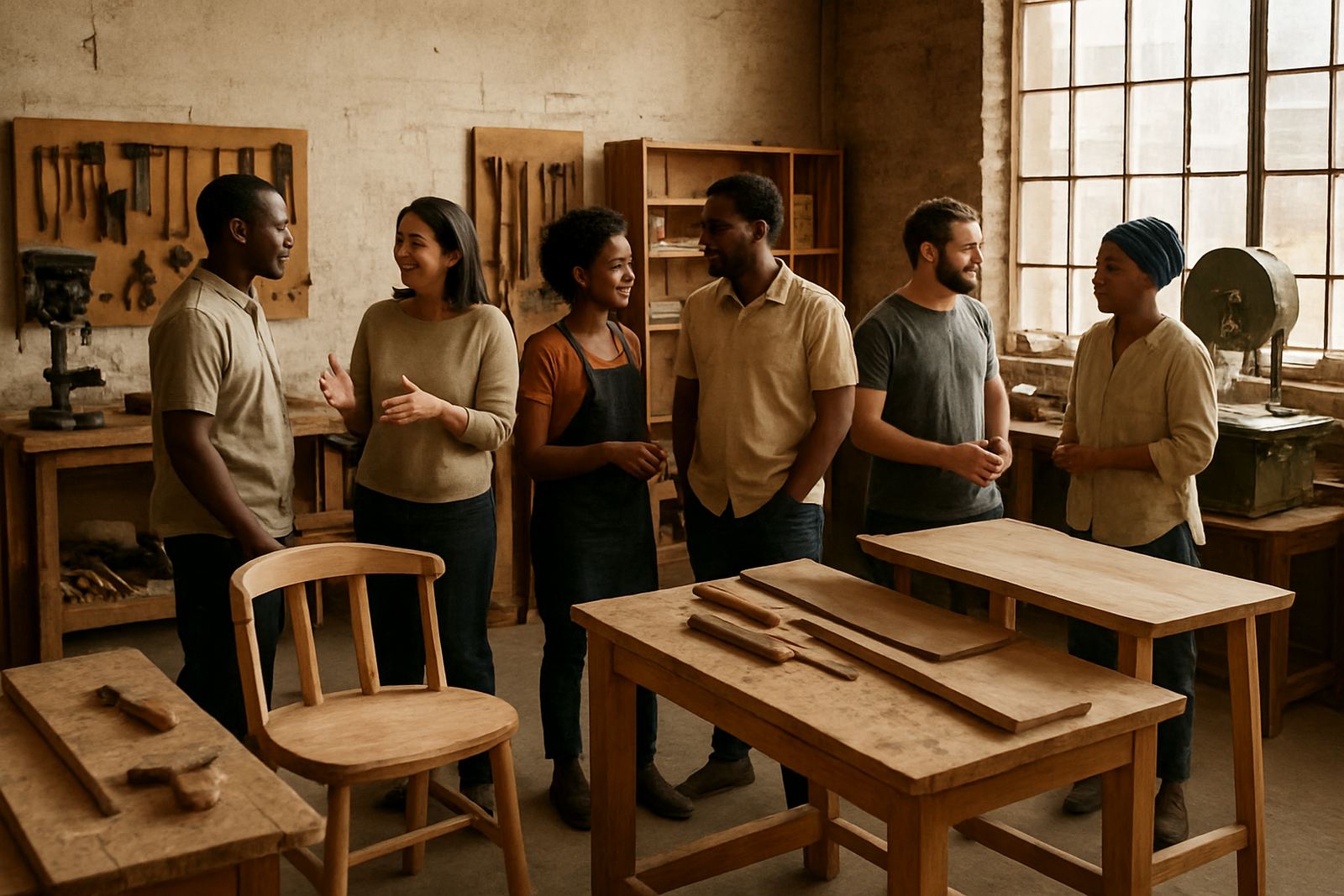
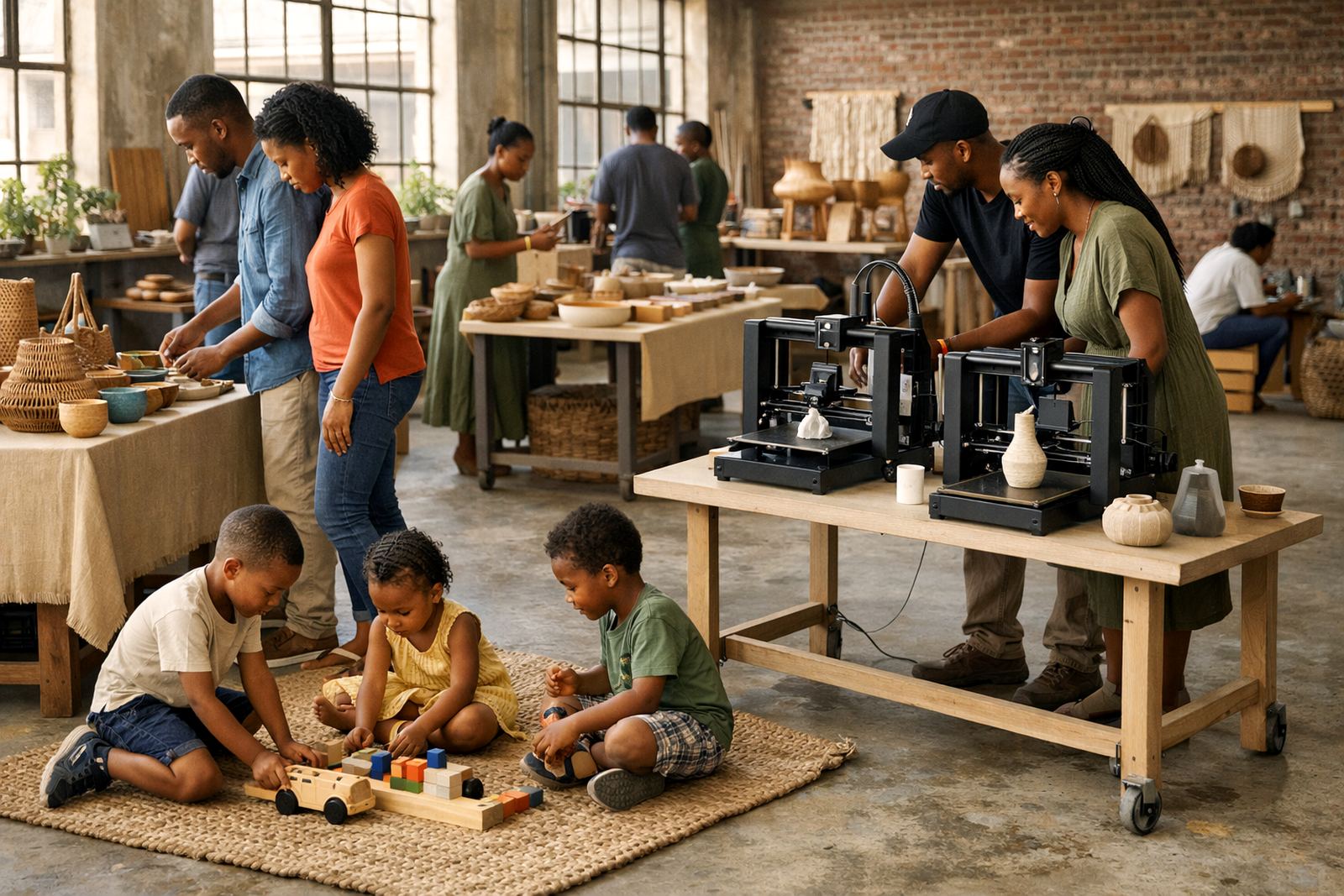
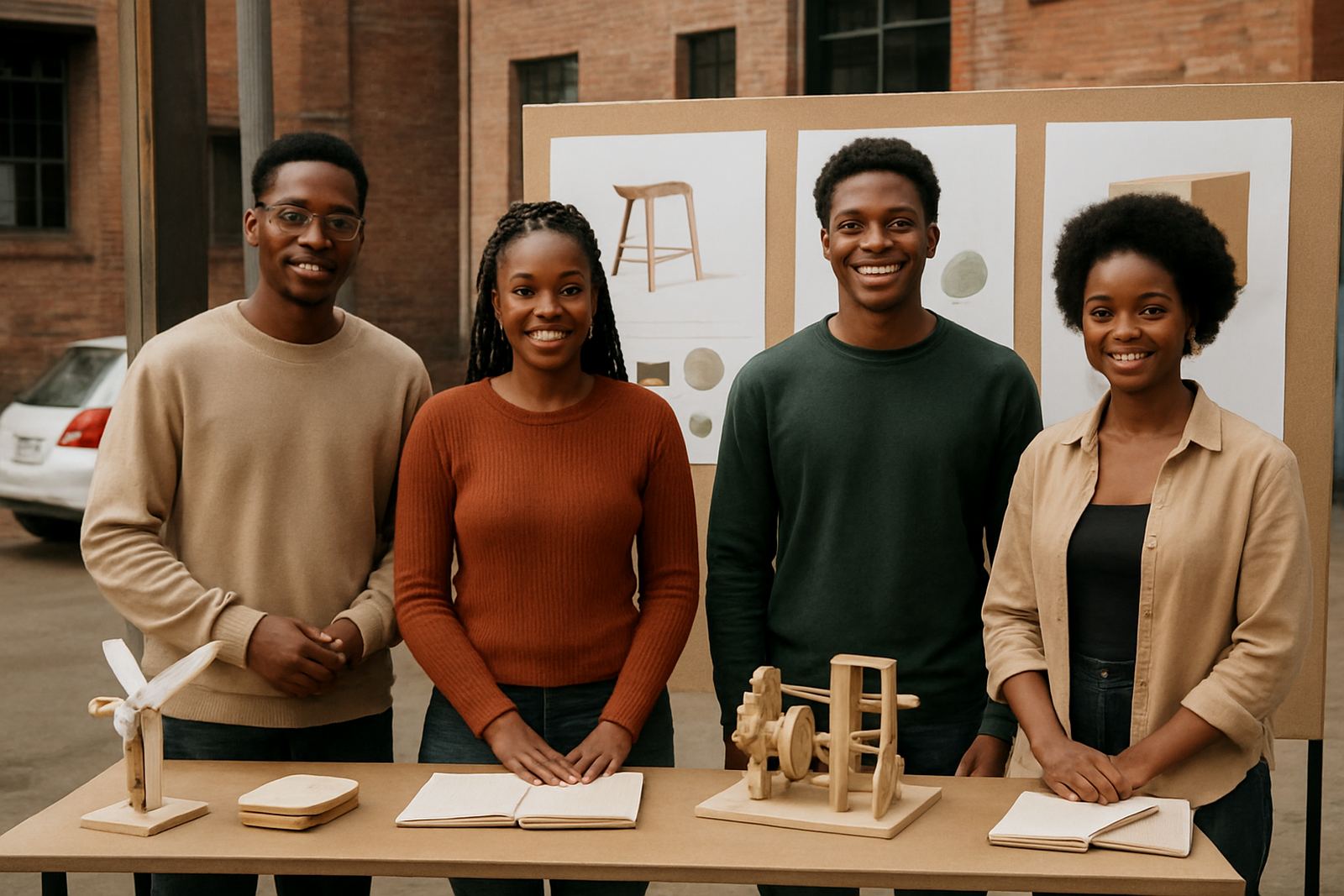
Space was another factor. The venue needed to handle making, pinning up boards, product photography and a small audience without feeling cramped. We kept the setup practical: clear circulation, simple display tables, enough light for photography and a run-of-show that could flex if electricity shifted or a group arrived late. That discipline kept the programme moving even when the day got messy.
- Attendance-friendly session lengths for busy participants
- Backup plan for load-shedding and equipment limits
- Display layout that worked for both products and printed portfolios
- Simple floor flow for setup, critique and public viewing
Mentoring circles and portfolio feedback in action
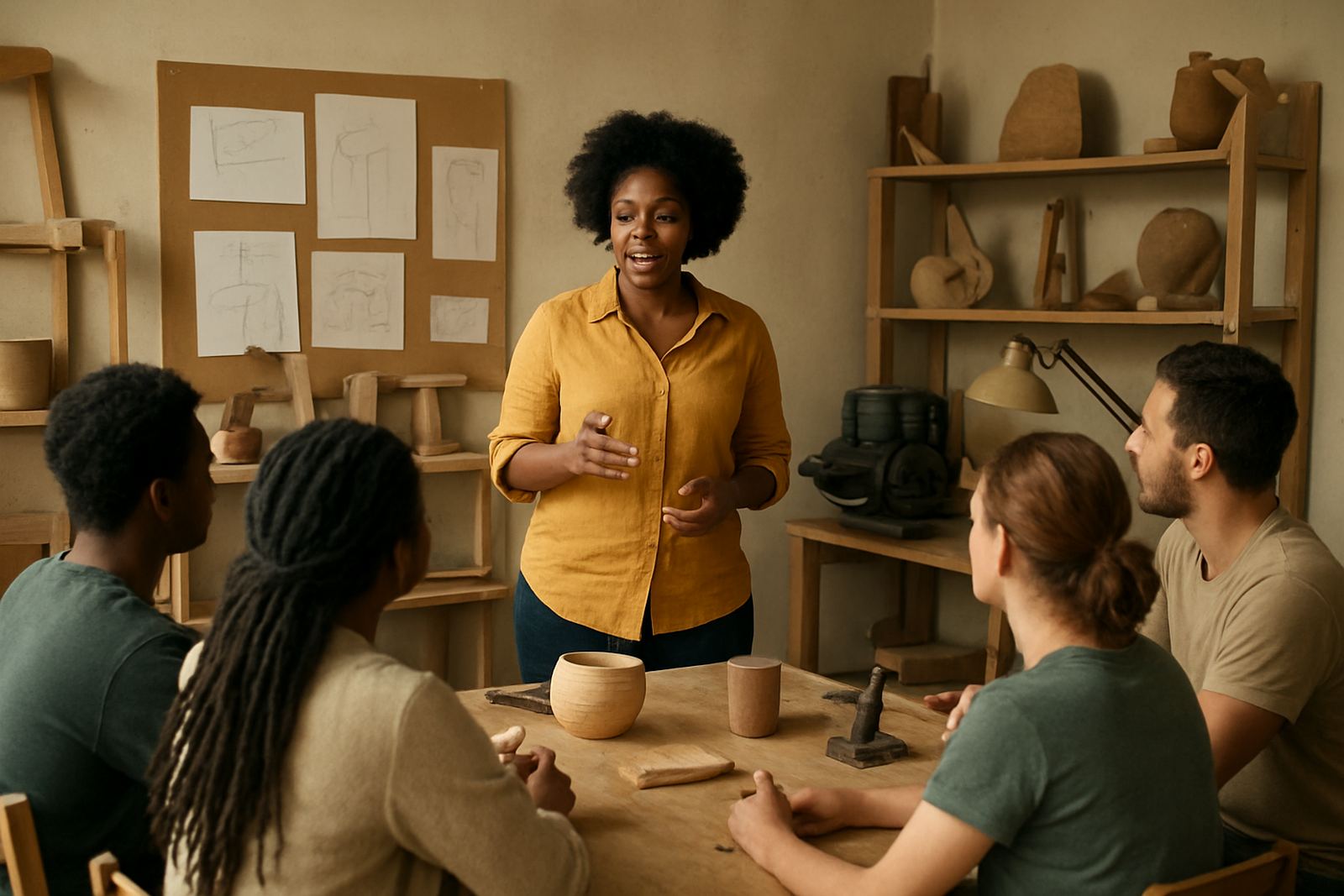
We supplied the core programme structure and ran the guided sessions. That started with creator introductions and short one-on-one intake conversations, then moved into portfolio feedback, concept shaping and mentor matching. Each participant got a clearer view of what their work was saying, where it was weak, and what could be tightened before the final presentation.
The mentoring was practical rather than theoretical. For some participants, that meant refining pricing language and product descriptions. For others, it meant choosing which images to show, how to explain process, or how to talk about audience fit. We also arranged collaboration calls between creators whose work could sit together, which helped a few of the younger participants see their work in a larger ecosystem rather than as isolated pieces.
- Portfolio feedback sessions for individual creators
- Mentor matching based on skill and project needs
- Collaboration calls between complementary makers
- Pricing support and market readiness notes
Showcase production, creator photography and styling
By week four, the focus shifted to presentation. We handled showcase curation, product styling, creator photography and event production so the final output felt coherent. The goal was not a glossy, over-polished look. It was to make youth work look serious, well thought out and ready for conversation.
We photographed finished pieces and in-progress work, then wrote short creator profiles that could be used on the day and afterwards. Styling was kept simple with natural textures, clean surfaces and enough breathing room for each item to hold its place. The event itself included a short speaking programme, table displays and a walk-through format that let visitors ask questions and spend time with the makers.
- Creator photography for portraits and project details
- Product styling for tables, boards and display plinths
- Curated showcase flow for better audience movement
- Creator profile writing for each participant
Six weeks from first session to public show
The project ran over six weeks. Week one was intake and orientation, week two focused on idea shaping, week three and four covered mentoring and production support, week five was final polish and photography, and week six was the showcase itself. That pace worked well because it gave people enough time to improve their work, but not so much time that momentum drifted.
We kept communication regular between sessions and checked on problems early. If a participant missed a meeting, we followed up with notes and a catch-up plan. That saved a lot of work later. The result was a cleaner final programme and a group of participants who were more confident speaking about their work, not just showing it.
- Week 1: intake and expectations
- Week 2: concept refinement
- Weeks 3 to 4: mentoring and production support
- Week 5: photography and final edits
- Week 6: public showcase
Results that carried beyond the room
The showcase gave the participants a proper public moment, but the stronger result was what happened afterwards. Several creators left with better written profiles, sharper pricing language and a more confident way to present their work to schools, venues, partners and peers. The programme also helped connect a few participants across disciplines, which led to follow-up collaboration discussions after the event.
For the client, the project proved that youth-led making can be presented with discipline without losing its energy. The work was local, honest and grounded in what young people are actually making in Johannesburg right now. That matters, because too many young creators are asked to fit into someone else’s idea of professionalism before they have had a chance to define their own.
- Improved presentation readiness across the group
- Stronger creator profiles and project descriptions
- Better confidence for speaking to partners and buyers
- New links between participants for future work
What we would do again
We would run the same project again with the same mix of structure and room for people to bring their own voice. The strongest parts were the short feedback cycles, the simple production plan and the direct link between making and presentation. Those pieces work well for youth programmes because they respect the realities people are working with.
If we repeated it, we would add one more round of small-group critique before the final photography day and keep a backup power plan even tighter for the Braamfontein venue. Those are small changes, but they help. The main lesson was clear: when young makers get practical support, clear deadlines and a real audience, the work improves quickly and the confidence stays with them.
- Keep the mentoring practical and short
- Build in one extra critique round
- Plan for transport, load-shedding and late arrivals
- Protect time for final styling and photography
Key facts
| Project name | Braamfontein Youth Lab |
|---|---|
| Location | Braamfontein, Johannesburg |
| Timeline | 6 weeks |
| Format | Guided sessions, mentoring circles, showcase production |
| Core outputs | Portfolio feedback, creator profiles, product photography, styled showcase |
| Audience | Youth-led makers, designers and emerging collaborators |