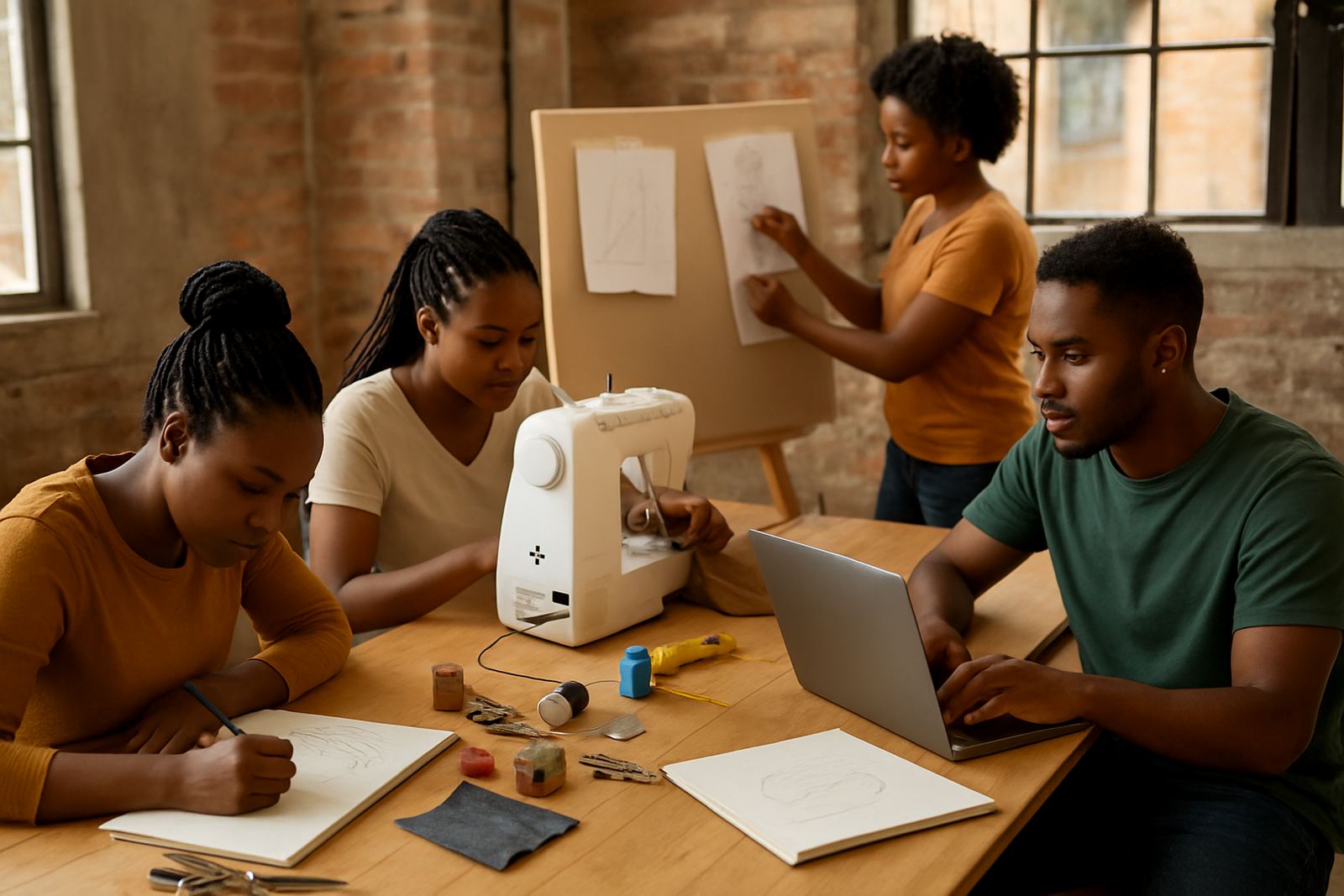
What the Pretoria Maker Session is for
This session is built for people who are already making things, or are ready to move from idea to a working offer. It is not a general networking mixer. The focus is on real introductions, clear next steps and a room where product designers, digital creators, craft-led businesses and workshop teams can meet others who understand the work. The Pretoria Chapter gives the session a local base, while the wider network opens doors to collaborators in other cities.
In practice, the session usually includes a short welcome, a structured round of introductions, selected creator spotlights, portfolio feedback and time for one-on-one conversations. That mix helps people leave with proper contacts, not just names on a list. We keep it practical and grounded, with enough time for questions about pricing, production, packaging and how to present work to buyers or partners, and yes there is space for the awkward bits too.
Session sizes and format options
The Pretoria Maker Session can be run in different formats depending on the venue and the number of people you want in the room. Small sessions work well for tighter feedback circles, while larger gatherings suit public showcases and partner events. The aim is to keep the setting comfortable enough for good conversation and still large enough to create useful overlap between disciplines.
- Small circle: 12 to 20 people for mentoring, portfolio review and focused collaboration chats.
- Standard session: 25 to 40 people for mixed introductions, showcase slots and guided networking.
- Open session: 50 to 80 people for broader community meetups, partner visibility and multi-city guest participation.
- Online link-in: live hybrid access for invited speakers, remote members or follow-up critique sessions.
For organisers, the format can be adjusted for morning, afternoon or early evening timing. A shorter 90 minute session suits busy weeks, while a 2 to 3 hour programme gives enough room for showcases and collaboration matching without rushing the room.
Where it suits in Pretoria and nearby
The session suits community halls, shared studios, coworking spaces, university-adjacent venues and arts buildings in Pretoria and surrounding areas. It is especially useful where there is foot traffic from students, makers, young founders and small creative businesses looking for a straightforward way to meet peers. Venues in Hatfield, Brooklyn, Arcadia, Sunnyside, Pretoria CBD and Menlyn often work well, depending on parking, access and the type of audience you want.
For partner-led gatherings, the session also works well as part of a design week, market day, workshop programme or municipal arts calendar. If the room has a practical layout, good acoustics and enough wall or table space for sample work, it can be adapted quickly. A ground-floor room is often easiest for load-in, especially if people are carrying prototypes, print work or packaged product. On hot days, proper ventilation matters and in winter, heating should be checked before guests arrive.
- Best for makers, designers, illustrators, product teams and small creative studios.
- Useful for portfolio reviews, collaboration calls, mentorship circles and community introductions.
- Works well where there is parking nearby or clear public transport access.
Set-up, power and practical venue needs
The Pretoria Maker Session does not need heavy production kit, but it does need a room that is ready for people, sound and simple display needs. A small PA or portable speaker is enough for most sessions, along with a microphone when the group is larger than 25 people. If the format includes projection, a screen or white wall and a tested power point are important. For hybrid sessions, stable internet and a backup data connection help when the weather or municipal supply gets in the way.
Power planning matters in South Africa, especially during load-shedding. If the venue has backup power, check what it covers: lights, sound, routers and charging points may not all be on the same line. For product demos or food-adjacent samples, ask whether the venue allows plug-in equipment and whether there are any restrictions on open flames or gas. Some spaces are strict on heat sources, so it is worth confirming this early.
- Minimum room needs: chairs, table space for sign-in and samples, and clear walkways.
- Recommended utilities: 2 to 4 power points, working lighting, and venue staff who know the breaker layout.
- If using gas or heat: written venue approval, safe placement and enough ventilation.
Care, servicing and event-day readiness
Once the session is booked, the main care requirement is keeping the venue and programme organised so people can move through the space without confusion. Tables should be wiped down before display items arrive, cables taped neatly, and sample pieces protected from dust and crowd handling. If the event includes prints, product mockups or photography, avoid direct sun through windows where possible because fading and glare can affect how work is seen. In summer, a bit of extra cooling makes a big differnce to comfort and focus.
After the session, the room should be packed down in a clear order. Shared materials, name tags and feedback sheets need to be counted, and any borrowed equipment should be checked against the sign-in list. If the gathering includes recurring mentor matching or a photo output, follow-up should happen quickly while conversations are still fresh. That is where the value often sits, not just in the room but in what happens after people leave.
What to check before you confirm your session
Before confirming the Pretoria Maker Session, it helps to check the guest count, audience mix and the main outcome you want from the day. Some groups want structured critique, others want a showcase and some want both. The more clearly you define the purpose, the easier it is to shape the flow, choose the right facilitators and match the right people in the room.
It also helps to confirm the following:
- How many attendees are expected, including speakers and support team.
- Whether the session is public, invite-only or mixed.
- Whether you need creator photography, profile writing or portfolio feedback on the day.
- Any venue rules on sound levels, trading, catering or equipment set-up.
- Whether the room must support hybrid access for members outside Pretoria.
If you are ordering the session as part of a wider programme, check timelines for partner approvals, venue access and content collection. Short lead times are possible, but better results usually come when the date, format and audience are set in advance.
Why this session matters for Pretoria creators
Pretoria has a strong mix of students, independent makers, designers and small teams building serious work, often while balancing other jobs or studies. A local maker session gives those people a place to test ideas, meet collaborators and hear what the wider network is working on. It is also useful for connecting Pretoria with members in Johannesburg, Cape Town, Durban and Nairobi, so projects do not stay trapped in one city.
For many attendees, the value is simple: one room, clear introductions and a chance to be seen by the right people. That includes people who can help with pricing, market readiness, collaboration, presentation and follow-through. If the session is well run, it leaves behind something useful after the chairs are packed away, namely contacts, direction and a stronger sense of where the work can go next.
Key facts
| Session type | City-based creator gathering with mentoring, showcase and collaboration elements |
|---|---|
| Capacity | 12 to 80 attendees depending on format and venue size |
| Duration | 90 minutes to 3 hours |
| Location | Pretoria Chapter and nearby partner venues |
| Power needs | Standard mains power, with backup advised for sound, lights and internet during load-shedding |
| Venue needs | Chairs, table space, display area, good ventilation and basic audio support |