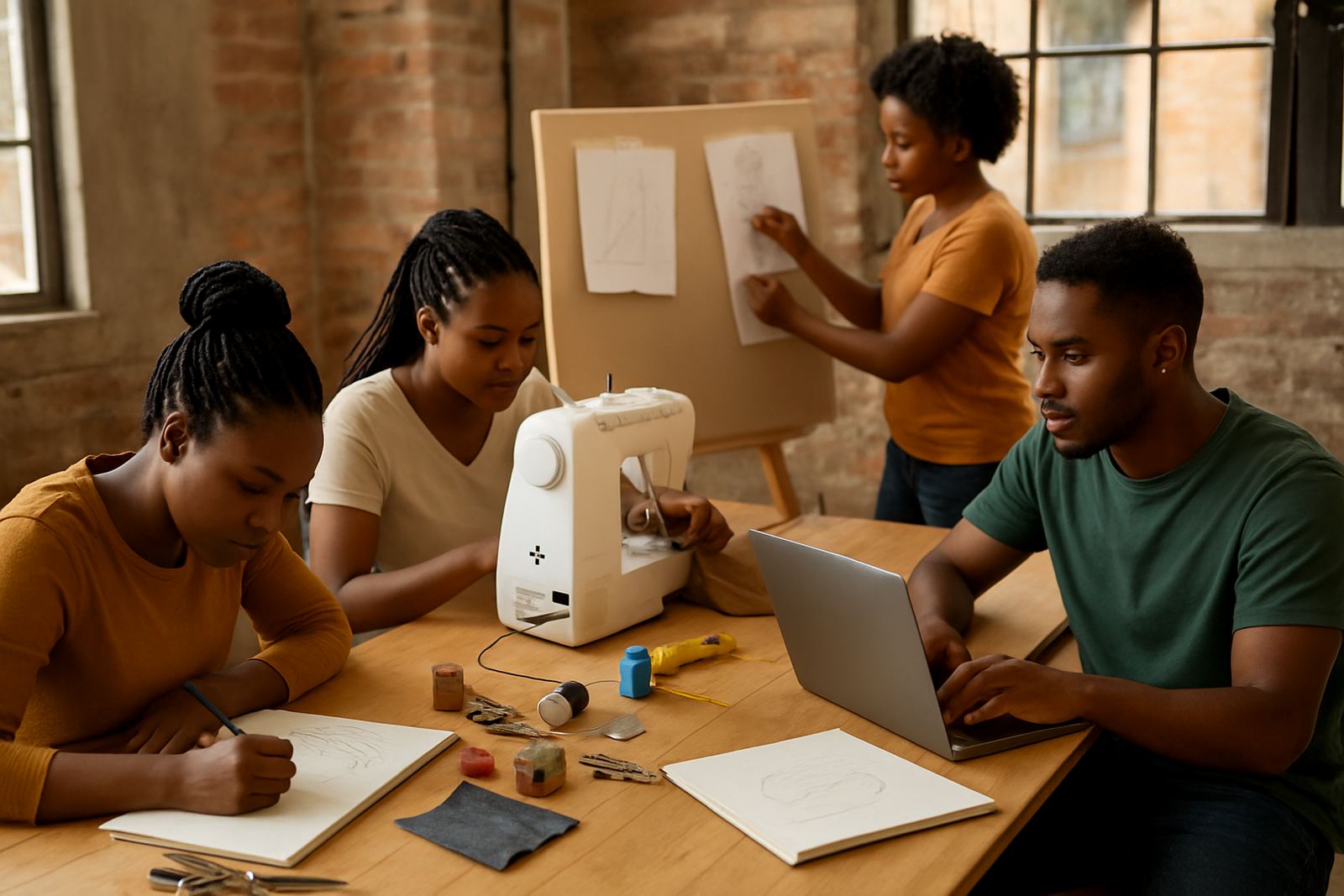
What the residency week actually includes
Creator Residency Week is built for makers, designers and builders who need concentrated time rather than scattered catch ups. The week brings together small group sessions, one to one mentor touchpoints, working blocks for production and a public sharing moment at the end. It suits members who want to sharpen an idea, get honest feedback and leave with something they can present, price or take forward to a partner.
Each residency is scoped around a clear theme or brief. That can be product development, creator portfolio work, collaboration planning, content for a launch, or preparing a small batch presentation. The format is practical. People arrive with a starting point, not a finished pitch, and the week gives structure without making the process stiff.
Because the group stays small, the pace is manageable and every person gets time in the room. There is space for cross border exchange too, so a creator from Johannesburg can compare notes with someone in Nairobi or Cape Town and still keep the work grounded in local reality. It is a good fit for members who want honest exchange, not a noisy crowd.
Residency sizes, formats and cohort options
Residencies are offered in a few sizes so the week can match the project and the number of selected members. A smaller cohort is better for deep feedback while a larger cohort works well when the focus is collaboration, showcase preparation or mixed discipline exchange. The standard format is one week, Monday to Friday, with optional online prep before the start and a review session after the showcase.
- Small cohort: 6 to 8 members for concentrated mentoring and quicker decisions
- Standard cohort: 10 to 14 members for balanced making, critique and sharing
- Extended format: two linked weeks for teams that need more production time
- Hybrid option: in person sessions in Braamfontein with online check ins for members outside Johannesburg
For teams working across provinces, we also split the week into build days and review days so travel is easier. This helps members coming from Durban, Pretoria, Cape Town or Nairobi plan properly and avoid losing time to unnecessary movement. If a group needs a mixed schedule, we can stagger attendance so the room never feels crowded.
Where it works best across Johannesburg and other cities
This residency suits members who want a central, accessible base in Braamfontein with easy connections to the inner city, Rosebank, Newtown and Soweto routes. It is especially useful for people who need short travel times between meetings, prototype checks and content capture. Braamfontein works well for public transport access, while the inner city setting also makes it easier to source materials quickly from nearby suppliers.
The programme also suits members who are planning public facing work. If your project needs a showcase, a creator profile refresh or a collaboration introduction, the residency gives you a structured runway. It is a strong option for product designers, digital creators, workshop teams and community leads who are ready to show progress not just talk about it.
In practice, the week works well for the following situations:
- Preparing for a launch, pop up or showcase
- Testing a new concept before a wider release
- Building partnerships across provinces or countries
- Collecting clearer imagery and wording for a profile
- Getting pricing support and market readiness input
Installation, power and venue planning
Residency Week is not a heavy infrastructure event, but the room setup still matters. Tables, seating, display surfaces and power access should be planned before the cohort arrives. If members are bringing laptops, tablets, cameras, ring lights or small tools, we recommend a layout with enough plug points and a clear walk way so people can move safely between work zones. In Braamfontein, load-shedding schedules must be checked daily, because even a short outage can interrupt printing, charging or live review sessions.
Where a residency needs video capture or live sharing, a backup power plan is important. That may include charged power banks, an inverter, or a small generator depending on the venue rules. If the week includes food or product sampling, check the space rules around preparation, waste removal and indoor ventilation. Some buildings in Johannesburg have stricter access control and after hours rules, so sign in procedures need to be confirmed early.
For outdoor or semi outdoor elements, weather cover matters too. Johannesburg afternoons can turn quickly, and if you are including product styling or creator photography, a shaded area or indoor fallback keeps the programme on track.
Care, servicing and keeping the week running
Because the residency depends on people, equipment and timing, care is mostly about preparation and daily housekeeping. Devices should be charged overnight, cables labelled, and any shared items returned to one storage point at the end of each session. If the work includes paper, fabric, packaging samples or finished product pieces, keep them in sealed tubs or folders so they do not pick up dust from the city air.
A short daily reset makes a real difference. Wipe surfaces, check extension leads, top up water, review the next day’s agenda and confirm who needs mentor time. Small practical steps keep the energy steady and prevent the week from slipping into confusion, which is easy to happen when several disciplines are in the same room.
- Test all charging equipment before day one
- Label any personal tools, cameras or cables
- Store sample work in dry, secure containers
- Confirm venue access times and security rules
- Set a daily close down time for review and reset
What to check before you book a residency
Before confirming a residency, check the cohort size, the working brief and the kind of output expected by the end of the week. It helps to know whether the focus is critique, content capture, collaboration or a public sharing moment. You should also confirm any material budget, whether the venue has secure storage, and if the programme expects members to arrive with work already started. A clear brief keeps the week focused and saves time.
Also confirm if the residency includes photography, profile writing, mentor matching or online session hosting after the in person week. Some members need support after the showcase, especially if they are pricing products for the first time or preparing to contact partners in other cities. If the project relies on a fast turnaround, ask about file handover times and who signs off the final schedule.
Good ordering checks include:
- Number of selected members
- Venue address and access instructions
- Power backup arrangements
- Storage for work in progress
- Any public sharing or invite list requirements
- Post residency support and reporting needs
Who leads the programme and how selection works
Creator Residency Week is coordinated by the PioCreat Africa team from Braamfontein, with programme, partnerships and operations support handled by the people who work closest to the community. Selection is based on readiness, relevance and the value a member can bring to the group. The aim is not to fill seats, but to place the right people in the room so the week has proper exchange.
Members are usually chosen for their current project stage, willingness to share openly and ability to contribute to the public showcase. That could mean an early stage product, a refined portfolio, a collaboration proposal or a community based idea. The best residencies are the ones where people arrive prepared, listen carefully and leave with sharper next steps. The atmosphere is warm and practical, not a buzzword club, and that keeps the work honest.
If you are planning a residency for your chapter, your cohort or a cross city group, the enquiry form on the contact page is the way to start. We can work with Braamfontein, Rosebank, Pretoria, Durban, Cape Town, Newtown, Soweto and Nairobi members, and we can shape the week for in person or online participation.
Key facts
| Programme length | 5 working days, with optional prep and follow up online |
|---|---|
| Cohort size | 6 to 14 selected members depending on format |
| Core outputs | Prototype progress, portfolio updates, pricing notes and public sharing |
| Venue base | Braamfontein, Johannesburg with hybrid access for other cities |
| Power needs | Plug points for laptops, cameras and lights, plus backup plan for load shedding |
| Best suited for | Designers, creators, workshop teams and collaboration projects |