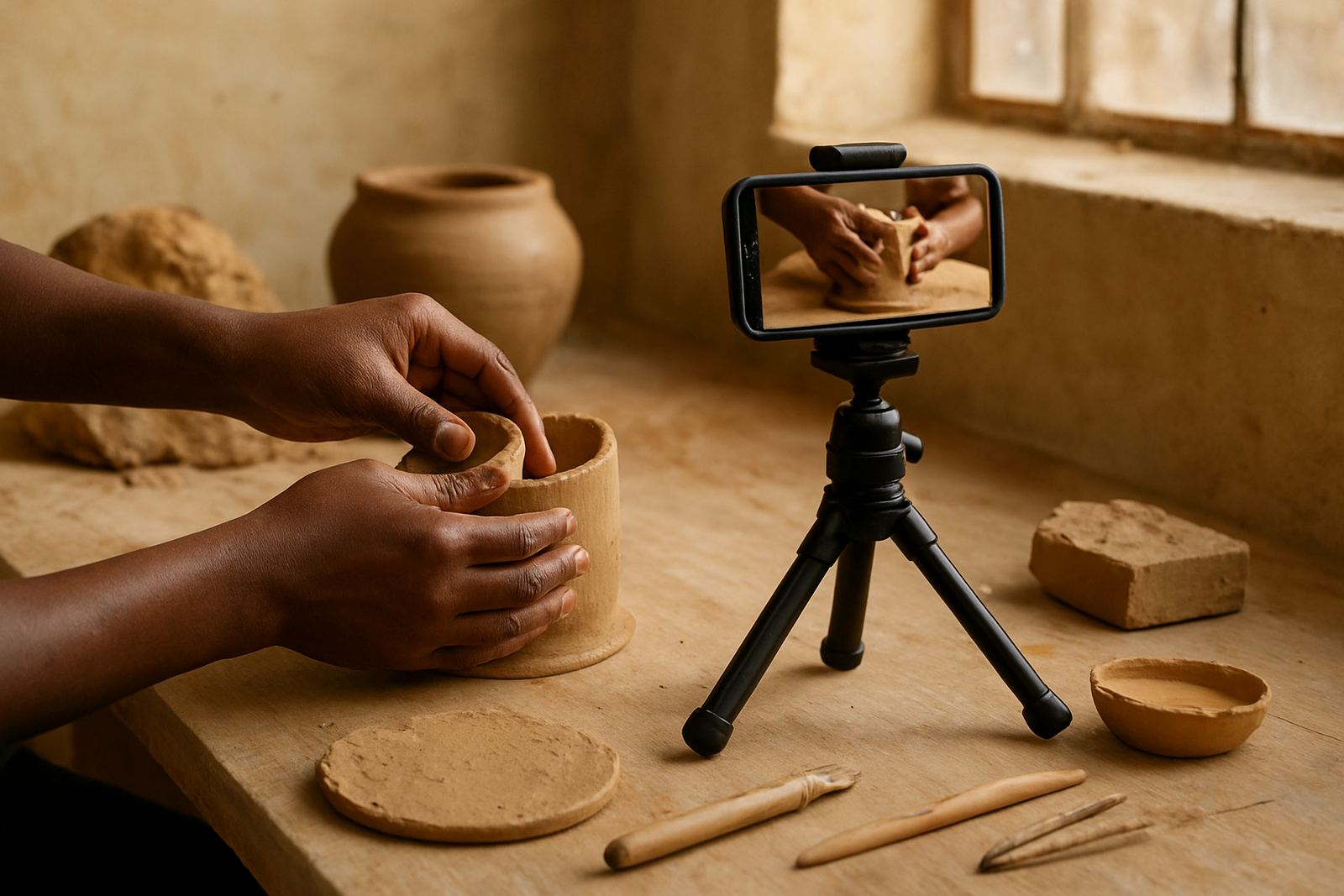
Show the process, not only the polished result
Trust grows when people can follow the journey from idea to finished work. A finished product photo tells part of the story, but process images, short clips and clear captions show that there was care behind it. If you are selling ceramics, fashion, digital art or workshop services, show the decisions you made along the way: material choice, testing, revisions and final checks.
For digital audiences, process content answers the quiet questions they do not always ask out loud. Did you make this yourself? Will the quality stay the same next time? Can you deliver what you promise? When you answer those questions in public, you reduce doubt before a first enquiry even lands.
- Share one behind-the-scenes post for every finished showcase image.
- Use captions that explain time, materials and the reason for each choice.
- Keep your footage clear and honest, even if it is filmed on a phone in natural light.
Make your proof visible and easy to verify
Audiences trust visible proof more than broad claims. That proof can be a portfolio, client feedback, event photographs, a project breakdown or a simple creator profile that explains what you do and where you work. If you run meetups or creative services across Johannesburg, Cape Town, Durban or Pretoria, show the places, the people and the outcomes. Specificity builds confidence.
It also helps to organise proof in a way that is quick to scan. People on mobile data do not have patience for long vague paragraphs. They want to see the service, the result and the next step. If you are posting online, keep your proof tidy and current so it does not look abandoned or old.
- Include dates, locations and names of projects where appropriate.
- Group testimonials by service, not in one long mixed list.
- Add short captions to event images so people know what they are looking at.
Speak plainly about what you can and cannot do
Clear expectations are one of the strongest trust signals online. People respect a creator or team that says exactly what is included, what takes extra time and what may change because of supply, weather or venue conditions. In South Africa, that kind of honesty matters. Loadshedding, courier delays, municipal venue rules and coastal humidity can all affect delivery, presentation and timing.
When you explain these realities upfront, you do not sound uncertain. You sound prepared. A practical message works better than a flashy promise that falls apart later. If a project needs 10 working days, say so. If a product styling shoot depends on natural light, say so. If a mentorship session has limited seats, say so and explain why.
- Name the turnaround time for each service or event.
- Explain any conditions that may affect delivery or attendance.
- Keep your language direct, warm and free of vague promises.
Use people, not just logos and captions
Digital audiences often trust people before they trust organisations. That is why names, roles and faces matter. When a community lists the people behind the work, it becomes easier to understand the standard behind the service. A programme lead, community partnerships manager, showcase producer, mentorship coordinator and operations lead all bring different signals of order and care.
For a pan-African community, this becomes even more important. Members want to know that there is real coordination across cities and time zones, not just a social feed. Use team introductions, programme updates and short creator interviews to show the human side of the work. A clear face and a clear role help the audience feel that someone will actually answer, follow through and keep the process moving.
- Introduce the person behind each programme or service.
- Share short creator stories from different chapters and cities.
- Use natural images of people working, meeting or reviewing work together.
Create a reliable rhythm for updates
Trust is not built by one good post. It is built by consistency. If audiences see regular updates, they begin to expect the same standard from your work. This does not mean posting every day. It means showing up on a schedule that fits your capacity and sticking to it. Monthly showcases, weekly tips, or a fixed online session each quarter can all strengthen confidence.
In Braamfontein, where many creatives move between study, freelance work and side projects, a reliable rhythm helps people plan. If they know when the next mentorship circle opens or when the next showcase call goes out, they are more likely to stay engaged. Consistency makes your community feel organised, not random. And when things change, communicate early, not after the fact.
- Set predictable dates for calls, showcases and feedback sessions.
- Post reminders before deadlines so people can plan around them.
- Follow through on rescheduled items with a clear new date and reason.
Turn local context into credibility
Local detail makes online work feel grounded. If your audience can see that you understand Johannesburg traffic, venue access, power cuts, transport costs and the realities of maker spaces, they are more likely to believe you can deliver in the real world. This is where a local example matters. A creator in Soweto may need a low-light photo plan because the shoot area loses daylight early. A Durban maker may need packaging that handles humidity. A Nairobi collaborator may need online timing that works across borders.
These details are not small things. They show that you understand conditions and can still produce quality within them. That is what people want from a serious partner: someone who can work through the practical side without drama. Trust online is not about looking perfect. It is about showing that you know how to do the job properly, even when the conditions change.
- Use examples from real cities and real working conditions.
- Show how you adapt for venue access, weather and connectivity.
- Make it clear that your process works in busy, local settings.
Ask for the next step while confidence is high
Once an audience trusts your process, make it easy to act. A clear enquiry form, a simple booking step or a direct invitation to join the next session keeps momentum going. If people need to search too hard, they may drift away. Trust should lead to action while the interest is still fresh.
Good calls to action are calm and specific. Tell people what they will get, how long it takes and what information they need to send. Whether they are asking for portfolio feedback, mentor matching, event production or collaboration support, they should know exactly what happens next. That final clarity often turns interest into participation.
When digital audiences understand your process, see proof of your work and feel the people behind it, they do not just scroll past. They lean in and stay.