
Start with the job the packaging must do
Before you buy anything, decide what the pack must actually achieve. For many small makers the job is simple: keep the product clean, stop damage in transit, show the item clearly and make the handover look considered. If you are selling at a Braamfontein market, sending orders by courier, or handing stock to a retailer in Pretoria, the packaging should do those four things first.
It helps to write down the risks by product. A candle needs protection from heat and scuffing. A printed notebook needs corners that do not bend. A baked item needs food-safe wrapping and a short shelf life plan. Once you know the risk, you stop overbuying. A plain box and one insert can do more than a fancy wrap with three layers that slow your packing table down.
The cheapest packaging is not always the one with the lowest unit price. If a low-cost bag tears easily, or a lid does not close properly, you lose time, stock and goodwill. Budget packaging should still be reliable, especially when load-shedding means your team is packing by torchlight or working through a power cut with a generator humming in the background.
Choose one base pack and use it well
Keep your system tight. Pick one main container for each product type and repeat it. That might be a kraft box, a clear sleeve, a simple paper bag or a reusable pouch. The less you switch between pack styles, the easier it is to buy in bulk and train helpers to pack the same way every time.
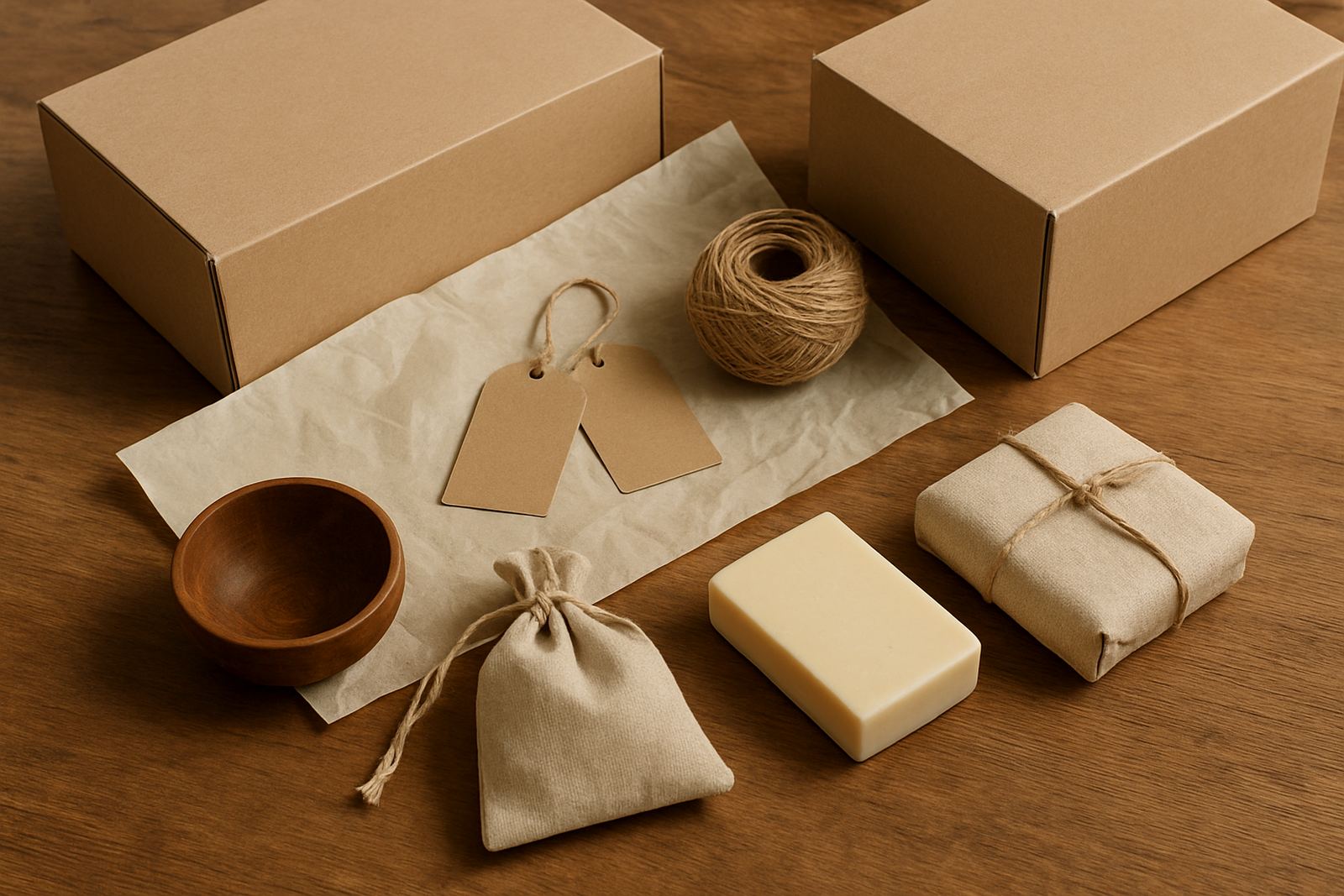
For many creators, a good starter set is enough:
- Plain boxes in 2 or 3 standard sizes
- Clear sleeves or bags for visibility
- Sticker seals or tape for closing
- One label style for product name and price
- Soft filler such as tissue, shredded paper or cardboard offcuts
That system keeps things tidy without making the workspace crowded. It also helps when you are selling from more than one chapter, because the same pack can work in Rosebank, Durban, Cape Town or at an online pickup point. The point is consistency, not fancy finishes.
Use local materials before ordering special runs
Special packaging runs can eat cash fast, especially if you are still testing your product line. Before you order custom printed boxes, look at what is already available locally. Plain cartons, butcher-style paper, recycled board and food-safe sleeves are often easier to source in small quantities and you can still make them look polished.
Local materials also cut waste. Cardboard offcuts from a supplier, for example, can become dividers for fragile items or base cards for jewellery. Brown paper wraps well, stores flat and works across many product types. In humid coastal conditions, especially around Durban, it is worth choosing materials that do not soften too quickly. If you are working in Johannesburg or Pretoria, dust protection matters more than moisture, so a sealed inner pack may be enough.
Try this simple rule: if a material does not add protection, branding or speed, leave it out. A neat pack with one label often looks more professional than a heavy pack that takes three hands to close.
Make the unboxing simple and repeatable
Customers remember a package that opens cleanly and presents the product without fuss. You do not need tissue in five colours or extras that slow the process. One clean reveal is enough. Keep the first impression clear, then let the product do the talking.
A repeatable unboxing routine saves time at busy markets and during dispatch. One person should be able to pack the same order the same way every time. That means the filler, label, seal and receipt all live in one place. It sounds basic, but it reduces mistakes and keeps your table looking organised when a queue starts building.
- Place the product in the same position each time
- Use one insert card for care instructions or pricing notes
- Seal the pack with a single sticker or strip of tape
- Keep extras like samples or thank-you notes to a minimum
- Check the final pack by feel as well as by eye
Small, clear labels keep things tidy and cut confusion at markets. If the product name, variant and price are easy to read, your customer does not need to ask twice.
Save money by packing for the route, not just the shelf
Good budget packaging depends on where the product is going. A shelf display in a studio shop needs a different solution from a parcel that will move through courier depots and delivery vans. If you pack only for display, you may overspend on presentation and still get damage in transit.
Think about the route from your worktable to the customer. Will the parcel be stacked with others? Will it sit in a hot car? Will it travel from Soweto to Sandton, or from Johannesburg to Nairobi through multiple handling points? Each route has a different level of risk. That is why some products need corner protection, moisture resistance or a stronger outer box, while others just need a clean wrap and a firm seal.
One practical method is to test packaging on three sample orders. Send them the way you normally would and see what arrives marked, crushed or loose. A small test costs less than replacing a whole batch later. It also tells you where the real weakness is, which is usually the closure, not the outer box.
Keep branding lean but recognisable
Budget packaging still needs a clear identity. You do not need expensive printing to make your work recognisable. A simple logo sticker, a consistent colour of tape or one well-made card insert can carry a lot of brand memory. Repetition matters more than decoration.
For creators building across multiple chapters or selling in different cities, the aim is to look like one family of products. Use the same wording, the same font on labels and the same pack size where possible. That way a customer in Cape Town sees the same standard as someone at a showcase in Braamfontein. It also helps when you grow into market tables, collaborations or retail consignment.
If you want to stretch the budget further, print generic inserts in bulk and add the product name by hand. That keeps setup costs low and allows quick changes when stock changes. A neat handwritten note can look more personal than a full print run, provided the writing is clear and the pack is clean.
A Braamfontein example that keeps costs in line
A small maker at a Braamfontein showcase might be selling hand-poured candles, priced carefully to leave room for stock, transport and a bit of margin. Instead of custom boxes, they use plain kraft cartons with one snug insert, a simple sticker seal and a printed care card. The candles stay protected, the table looks organised and the packing time stays short.
Because the pack is simple, the maker can scale without changing the whole system. More stock means more cartons, not a new design process. If the candles later move into a Pretoria chapter market or a Durban pop-up, the same pack still works. That kind of flexibility matters when you are balancing production, promotion and cash flow at the same time.
The lesson is straightforward: a budget pack should be practical first, then neat, then memorable. When those three things line up, you spend less time wrapping and more time selling.