Start with the object, not the light
Before you hire fittings or buy bulbs, decide what the audience needs to see. A ceramic cup, a textile sample, a prototype chair and a framed illustration all need different light. The aim is not to make everything bright, but to show texture, colour and shape without glare or harsh shadows.
For a showcase in Braamfontein, that often means thinking about the actual room first. Is the wall white or cream? Are there windows that bring in afternoon sun? Is the floor dark concrete or glossy tile? The same light can look clean in one venue and flat in another. Start by placing the product where people will view it, then test the light from that angle.
- Check if the item has shine, detail or fine edges that need soft side light.
- Use direct light for structure, but avoid hitting reflective surfaces head-on.
- If the product changes colour under warm light, test it in the exact venue.
Choose brightness that suits the room
Many first-time exhibitors make the space too dim or far too bright. Too little light and visitors struggle to read labels or see finish quality. Too much and the display starts looking flat, with no depth at all. The right level depends on ceiling height, wall colour and how close people stand to the work.
A small gallery corner in Johannesburg does not need the same lighting as a market hall in Durban. In a compact space, a few well-placed lights can be enough. In a larger venue, you may need several points of light to stop the back wall from fading into shadow. If the room already has strong overhead lighting, use your own lights to guide the eye rather than competing with them.
- Test the display at normal viewing distance, not only from right under the fitting.
- Keep a spare bulb or backup fitting on site in case one unit fails.
- If the venue has mixed lighting, switch off what you can and control the rest.
Respect colour, especially for handmade work
Colour can shift under the wrong light. A deep blue print may look dull. A warm wood finish may look too orange. For makers who spend days matching samples, that is a real problem. Good showcase lighting should let the product keep its true colour, or as close as possible.
That matters in a setting where buyers want to compare work from different makers. If one stall or display is lit too warm and another too cool, the products are not being judged fairly. Keep the colour temperature consistent across the display area, and avoid mixing too many light tones in one small room. A practical test is simple: place a white sheet or plain card beside the product and see if it still reads as white.
- Use one light tone across the full display area where possible.
- Watch for colour casts on skin tones in creator photography too.
- Recheck lighting at night, since a venue can feel very different after sunset.
Plan for load-shedding and last-minute changes
In South Africa, a good lighting plan has to survive power cuts, cable limits and venue changes. If your showcase depends only on fixed mains power, you are taking a chance. The practical approach is to have more than one option ready: battery units, charged backup lights, and a layout that still works if one section goes dark.
For events in Braamfontein or Pretoria, that may also mean checking which sockets are on different circuits, and whether the venue allows extension leads across walkways. Keep cables neat and taped down so people do not trip, especially when the room fills up. It is worth doing a full power test before doors open, because once visitors arrive there is usually no time to rewire anything.
- Charge battery lights fully the day before, then test their run time.
- Use cable covers where foot traffic is heavy.
- Map the setup so you know which lights can be switched off first if power becomes limited.
Use light to guide movement, not just to decorate
Showcase lighting should help people move through the space in a clear order. A brighter pool of light can pull visitors toward a featured product, while softer light can signal a place to pause and look closer. This is useful at meetups where several makers share one room and attention must be split carefully.
Think of light as part of the route. Put the strongest light on hero items, then use lower light levels for supporting pieces, sample tables and conversation corners. If everything shines equally, nothing stands out. If the room feels too stark, people may not stay long enough to engage. A warm, balanced setup encourages longer conversations and better questions from buyers and partners.
- Highlight one main point in each display zone.
- Leave enough light near seating areas for note-taking and discussion.
- Use shadow on purpose where you want quiet focus, not distraction.
A Braamfontein example that works in real life
Imagine a Friday evening showcase in Braamfontein with ceramic pieces, printed scarves and small product prototypes. The venue has high ceilings, a few windows and a white wall that catches daylight until early evening. The team wants the room to feel calm, clear and easy to walk through, not overdone.
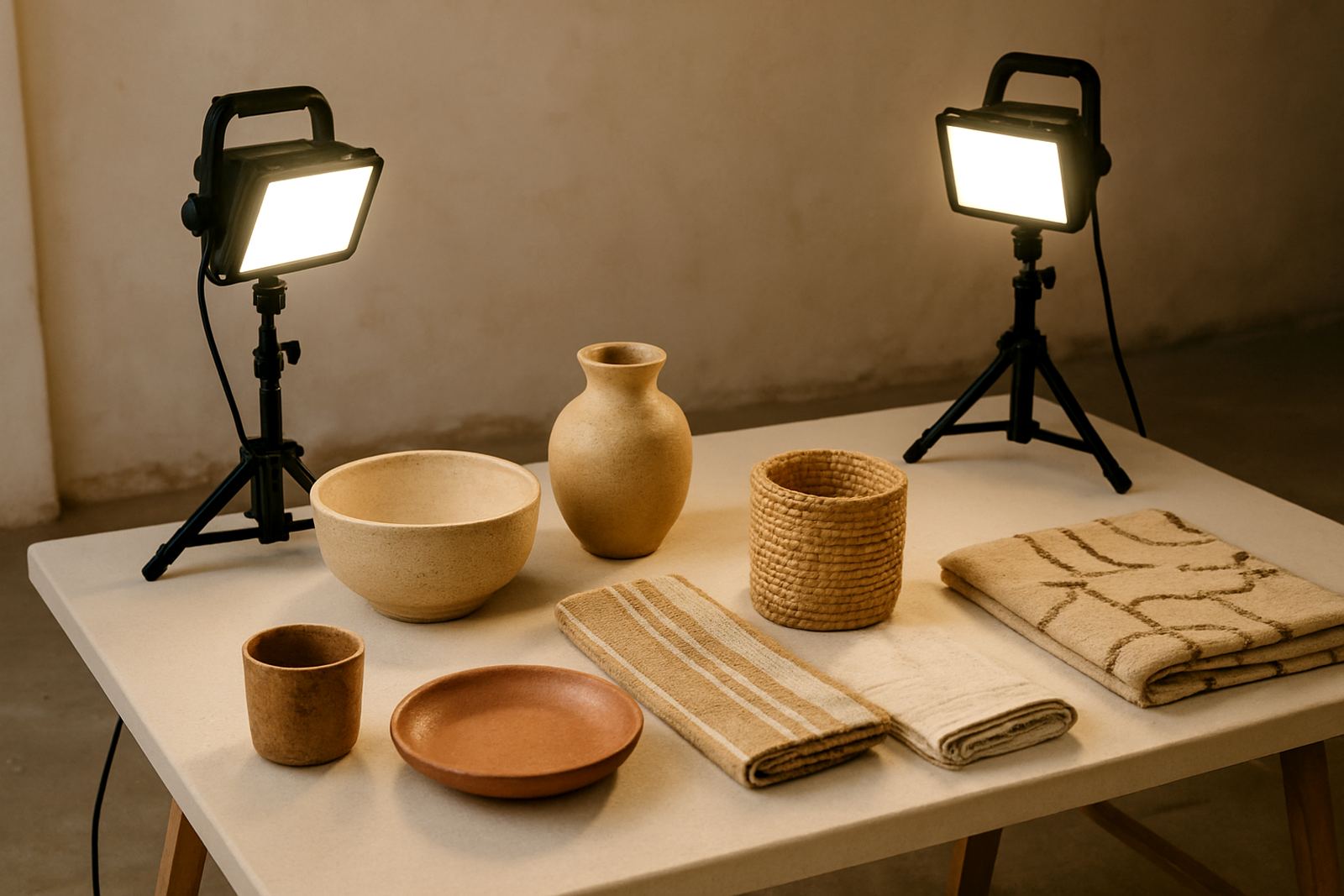
The practical setup would be simple. Place the ceramics under soft front light with a slight side angle so the glaze shows. Keep scarves under even light so their colours stay true. Use one brighter beam for the prototype table, then lower light around the seating area. Add a battery backup in case of load-shedding, and do a quick walk-through with the lights off and on before the first guests arrive. That one test usually reveals the problem spots immediately, and saves time later.
Good showcase lighting is not about big budgets. It is about making careful choices that suit the room, the work and the people in it. When the light is right, visitors notice details they would otherwise miss, and the whole space feels more considered.