

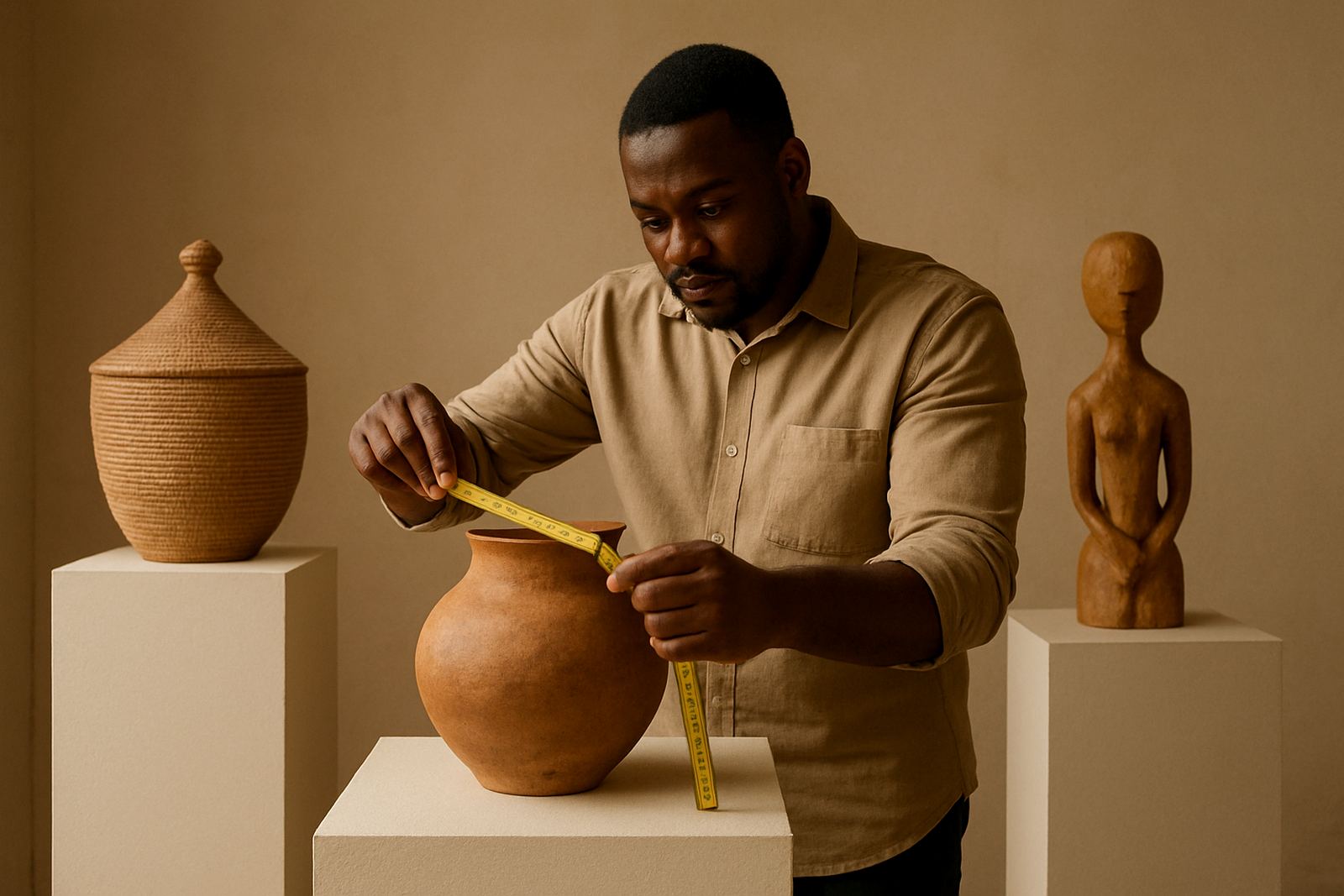
What showcase curation covers
Showcase curation is the planning of how creator work is seen, grouped and experienced at an event. For a product launch, community showcase, mentorship finale or small exhibition, we shape the display so visitors can understand the work in a few seconds and then spend more time with it. That includes layout planning, category grouping, item labels, display order, styling notes and the practical flow between tables, plinths, walls and demo points.
We work with makers, designers and workshop teams who need their work to look organised without losing the human story behind it. Whether you are showing ceramics, apparel, prints, digital products, furniture pieces or mixed media, we keep the setup simple enough for quick bump-in on event day and sturdy enough for repeated viewing. In Joburg venues, where load-shedding and tight access can affect setup time, that matters.
- Display zoning for up to 3, 6 or 10 creator profiles per section
- Table-top, wall, floor and plinth arrangements based on venue size
- Clear labelling for prices, editions, materials and creator names
- Simple traffic flow so visitors do not block entrances or talk areas
What is included in a curation package
Each package is built around the event format, the number of creators and how much handling the work needs. A small edited showcase in Rosebank will need a different approach from a full day open studio in Newtown or a hybrid session with online viewers joining from Nairobi. We plan the physical display, the visitor route and the story behind the work so the room feels ordered, not cluttered.
Where needed, we also advise on print materials and practical display items such as risers, stands, clip rails, table coverings and notice cards. If the venue has strict rules, for example no drilling into walls, limited wall tape or no open flames, we plan around that from the start.
- Pre-event consultation on theme, audience and display goals
- Curated floor plan with placement notes for each creator
- Object grouping by material, colour, price band or product type
- Label text guidance for titles, editions, sizes and pricing
- On-site styling support during bump-in and final checks
Our curation process from brief to opening
We keep the process practical and easy to track. First we collect a brief from the organiser or creator group, including event date, venue dimensions, power access, number of exhibitors and any security or storage limits. Then we review visuals, sample pieces or product lists and decide how to arrange them for the strongest impact. If the show is in Braamfontein or nearby, we can do an in-person site visit. For other cities, we work from measurements, photos and a clear call.
After the plan is signed off, we prepare the display map and a packing list so every item arrives ready for its place. On the day, we assist with layout, final placement and last checks before doors open. For larger showcases, we also stay available during the first hour to adjust labels, straighten product groupings and manage small issues, because things always shift once people start moving through the room.
- Brief and venue review
- Curatorial plan and layout draft
- Item list, label copy and display notes
- Event-day setup and final adjustment
- Post-event review with notes for next time
Turnaround times and planning windows
For a compact showcase with a defined product list, we usually need 5 to 7 working days after receiving all the material. For fuller exhibitions, themed edits or multi-city programmes, plan 2 to 4 weeks ahead. That gives enough time to confirm measurements, labels, access times and any print requirements without rushing the final layout.
If the event is tied to a mentorship circle, a community partnership or a public calendar date, earlier planning helps with permits, venue approvals and creator confirmations. In Johannesburg, some venues have strict loading bay hours and limited parking, so a proper buffer helps avoid late arrivals and missed setup windows. For online showcase support, we can also prepare a digital ordering of work and talk points within a similar timeframe.
- Small showcase: 5 to 7 working days
- Medium event: 10 to 14 working days
- Multi-creator exhibition: 2 to 4 weeks
- Rush requests: subject to schedule and venue access
Pricing approach that suits the size of the show
Our pricing is based on the scope of the event rather than a fixed one-size-fits-all fee. The main drivers are number of creators, amount of display planning, travel between areas, setup time, on-site hours and whether extra styling or printed material is needed. A one-room Braamfontein showcase is priced differently from a two-day programme in Pretoria or a mixed in-person and online activation.
We are upfront about what sits inside the quote and what counts as an add-on. That can include extra site visits, late-night bump-outs, photography support, or additional label sets for replacement stock. Where a creator group is building for the first time, we can also recommend a lean setup so the spend stays manageable and the display still looks orderly. No hidden extras, just the costs that match the work.
- Base fee for planning and curation concept
- Setup fee for on-site styling and placement
- Add-ons for print, travel, extra hours or complex handling
- Discounted rates for recurring community programmes
Maintenance and refresh intervals during the event
Displays need checking once people start walking in, picking up work and asking questions. For a half-day event, one mid-session check is usually enough. For full-day showcases, we recommend a refresh every 2 to 3 hours, especially if the venue gets crowded or if the work is small and easy to disturb. In humid coastal settings like Durban, we also watch for paper curl, label lifting and product handling marks.
Maintenance includes straightening labels, re-spacing items, replacing damaged price cards, checking that tables stay stable and making sure any lighting or signage still points where it should. For shows running over multiple days, we suggest a closing check each evening and a quick open check the next morning. This keeps the display tidy and helps the public experience stay consistent, even when foot traffic is heavy.
- Half-day event: one check
- Full-day event: two or three checks
- Multi-day event: daily closing and opening review
- Outdoor or high-traffic event: extra checks after peak times
Who this works best for
Showcase curation suits creators and organisers who want work presented properly without making the room feel overdone. It is a strong fit for collective exhibits, market activations, mentor-led showcases, campus programmes, chapter meetups and pop-up events where first impressions matter. If your team includes makers from different cities, we can align the display so the presentation still feels joined up across locations.
Our Braamfontein base means we are close to central Johannesburg venues, but we also support chapters and partners in Cape Town, Durban, Pretoria, Soweto, Newtown and Nairobi. That cross-city experience helps when you need one style of curation for several audiences, yet each site has different floor space, power access and venue rules. The aim is simple: show the work clearly, protect the pieces and make it easy for people to connect with the people behind them.
Key facts
| Service area | Braamfontein, Johannesburg and project work across South Africa and the continent |
|---|---|
| Best for | Public showcases, themed edits, small exhibitions and creator-led events |
| Lead time | 5 to 7 working days for small jobs, 2 to 4 weeks for larger programmes |
| Format | In-person, hybrid or online supported showcase planning |
| Pricing model | Quoted per scope, with planning, setup and add-ons itemised |
| Maintenance | One to three checks per event day, then daily review for multi-day shows |