
Event production for creator gatherings that need order
Our event production service is for organisers who want the event to feel organised, on time and easy to follow for guests. We work on meetups, panel talks, product launches, mentorship evenings, portfolio showcases and hybrid sessions for creator communities, brands and partner groups. The focus is practical: clear run sheets, proper timing, venue readiness and steady coordination on the day.
We regularly support events for 20 to 200 people, although smaller roundtables and larger community showcases can be planned too. In Braamfontein and nearby Johannesburg venues, that means working around load-shedding, parking limits, building access rules and sound levels that fit the space. For outdoor or mixed-use spaces, we also factor in weather cover, power back-up and crowd flow so the event does not stall when conditions change.
- Meetup planning and speaker scheduling
- Launch run sheets and stage flow
- Community showcase coordination
- Venue setup checks and guest movement
- Hybrid event support for online and in-room audiences
What is included in the production pack
Each production scope is shaped around the event size and the number of moving parts. A standard package usually includes planning calls, a run of show, supplier coordination, venue walk-throughs where needed, and live event control. If your event includes microphones, projection, photography, creator styling or guest registration, those items are mapped into the schedule so every person knows where to be and when.
We also help with content order, because creator events can lose energy if the programme runs too long or speakers overrun. A good flow keeps the audience engaged and gives each speaker enough time without crowding the schedule. For showcase events, we build enough spacing for arrivals, networking and product viewing, and we leave room for quick adjustments if a speaker arrives late or a session runs over by 10 to 15 minutes.
- Pre-event planning call and scope confirmation
- Run sheet with timing, speaker order and cues
- Supplier and venue coordination
- Registration flow and guest management notes
- On-site event lead or floor coordination
- Post-event wrap and issue list
How we run the production process
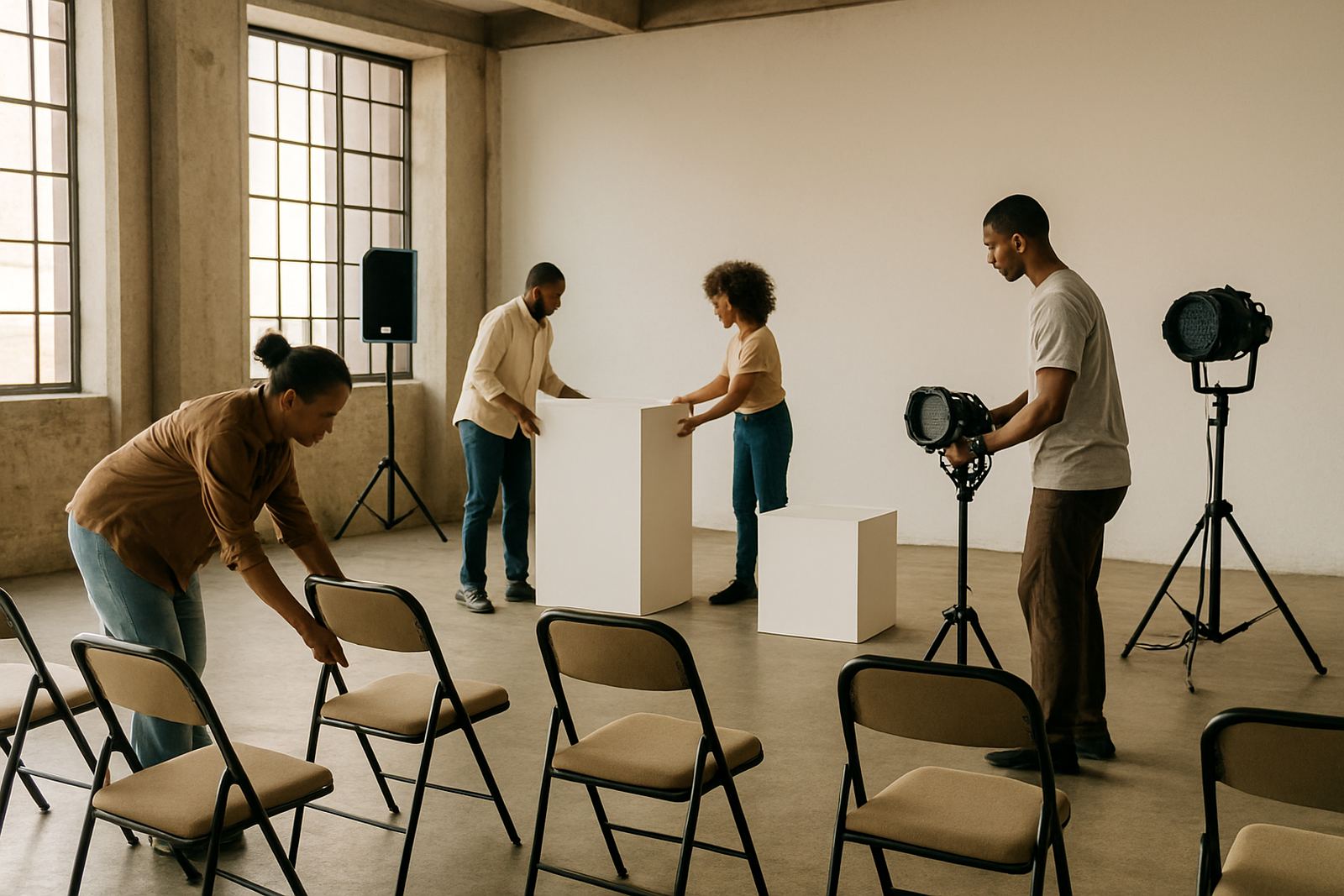
We keep the process simple and structured. First, we confirm the event goal, expected guest count, format and venue. Then we map the technical and logistical needs, including seating, power points, microphones, signage, stage area and any community partner requirements. After that, we prepare the event schedule and assign responsibilities so the team is not guessing on the day.
For most events, the production timeline starts 2 to 4 weeks ahead. Smaller internal meetups can move faster if the venue and speaker list are already settled. Larger showcase programmes need more lead time, especially when multiple contributors, sponsors or a live stream are involved. Our team keeps the paperwork light but clear, with one main point of contact and a shared event brief that can be updated as plans change. That keeps things moving without endless back and forth.
- Step 1: brief, goals and guest numbers
- Step 2: venue and technical review
- Step 3: run sheet and task allocation
- Step 4: rehearsal or final checks
- Step 5: live coordination on the day
- Step 6: post-event wrap and next steps
Turnaround times, planning windows and maintenance intervals
Turnaround depends on the size of the event and how ready the inputs are. A small meetup with a confirmed venue and speaker list can usually be set up within 5 to 7 working days. Mid-size talks and showcases normally need 2 to 3 weeks. Larger programmes, especially those with partners, multiple sessions or media elements, are best planned 4 to 6 weeks ahead so there is room for approvals and proper checks.
For ongoing community programmes, we offer maintenance intervals that keep the event series steady instead of treating each session as a one-off. That can mean monthly planning reviews, fortnightly check-ins during a campaign period, or a final 48-hour production review before each event. If you are running a series across Braamfontein, Pretoria, Cape Town, Durban or online, this rhythm helps keep schedules tight and avoids last-minute changes that cost time and Rand.
- 5 to 7 working days for smaller events
- 2 to 3 weeks for standard talks and showcases
- 4 to 6 weeks for multi-part programmes
- Fortnightly or monthly production check-ins for series work
- 48-hour final review before live delivery
Pricing approach and what affects the cost
We price event production according to scope, not guesswork. The main factors are guest count, venue complexity, number of speakers, technical needs, hours on site and how much coordination the team needs to carry. A simple talk with one venue contact costs less than a showcase with registration, stage movement, multiple suppliers and same-day content changes.
For clearer budgeting, we usually structure pricing as a fixed production fee for defined scope, then separate line items for any extra hours, specialist suppliers or added coordination. That gives clients a clean view of what is included and what sits outside the original brief. If the event is happening during a busy season or over a weekend, we will also flag the time impact early so there are no surprises. The aim is to keep the numbers plain and the planning sensible, not to hide the real work inside vague rates.
- Fixed fee for agreed production scope
- Separate cost for added hours or extra event days
- Line items for specialist equipment or external suppliers
- Clear change notes if the brief expands
On-the-day coordination and after-event handover
On event day, we focus on timing, people and pressure points. That means speaker arrival checks, cue tracking, room readiness, audience flow and fast decisions if something slips. In Johannesburg venues, power timing and access windows can affect setup, so we build enough buffer into arrival times and changeover points. If the programme includes online guests, we also test the feed and handover points before people arrive.
After the event, we provide a short production wrap that notes what worked, what slowed the flow and what should be adjusted for the next session. For recurring creator programmes, this handover is useful because it keeps the next event sharper. If the event will run again, we can maintain the same structure with small updates, or rework the timing if the audience size, venue or partners change. Small details matter here, and a tidy handover saves time later on.
- Arrival and setup checks
- Speaker and MC cue management
- Live issue handling and timing control
- Post-event notes and follow-up actions
- Programme improvements for the next session
Key facts
| Service area | Braamfontein, Johannesburg, South Africa, with support for Cape Town, Durban, Pretoria, Nairobi and online sessions |
|---|---|
| Event types | Meetups, talks, launches, showcases, panel discussions and hybrid creator sessions |
| Typical lead time | 5 to 7 working days for smaller events, 2 to 6 weeks for larger programmes |
| Guest capacity | From 20 people up to around 200, depending on venue and format |
| Core deliverables | Run sheet, logistics plan, venue coordination, on-site control and post-event wrap |
| Pricing model | Fixed fee per agreed scope, with added costs for extra hours, specialist suppliers or expanded requirements |