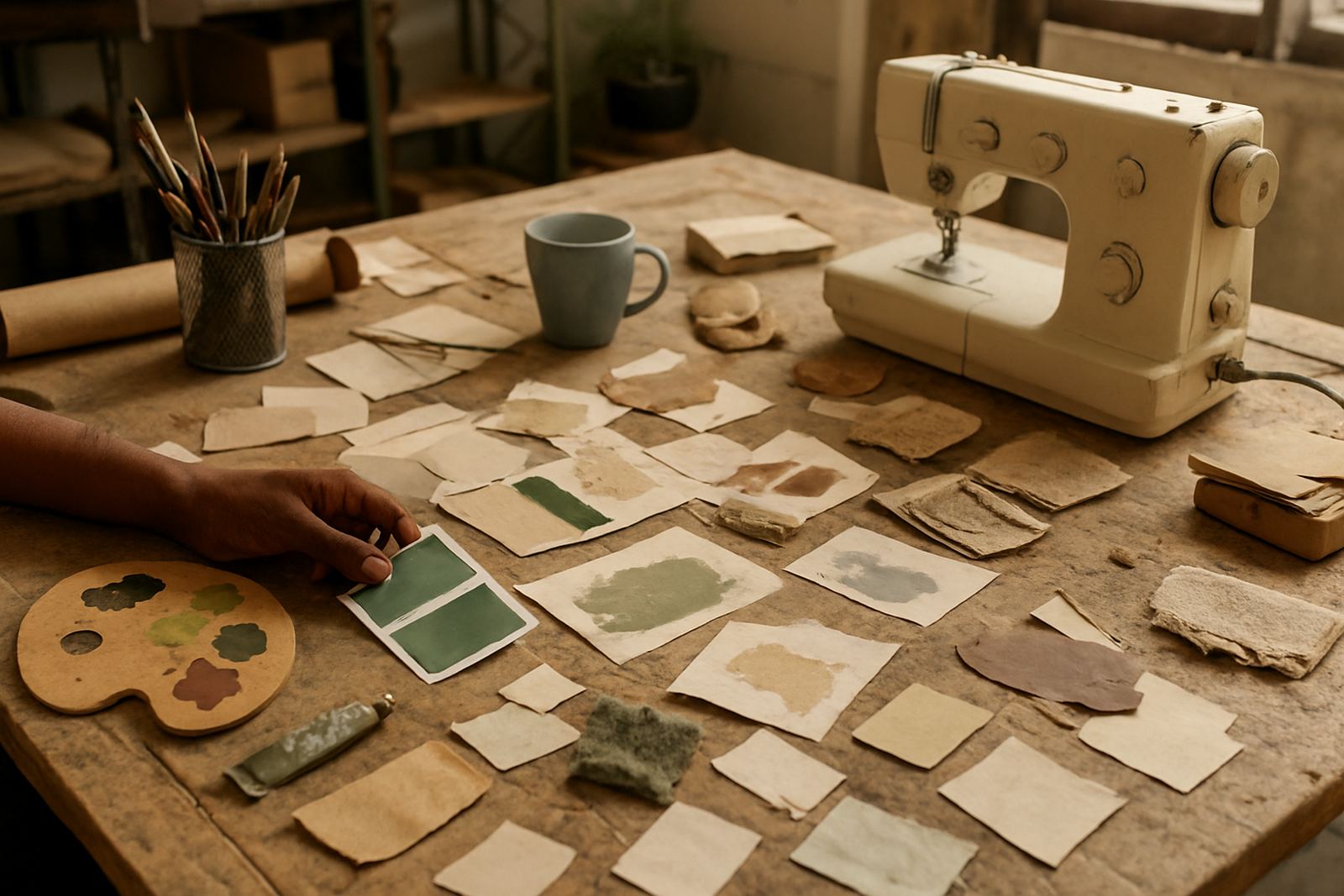


Why the table matters more than you think
At a showcase, the table is often the first thing people read before they read your name. If the surface feels crowded, shaky or confusing, visitors move on quickly and your work has to fight for attention. That is not about having expensive props. It is about making the table easy to understand in a few seconds.
In Braamfontein, where people move fast between meetings, talks and launches, a maker has only a short window to be noticed. The same is true in Cape Town markets, Durban pop ups and Pretoria venue foyers. A clear table says you know your work, you know your audience and you have thought through the details.
The biggest mistake is assuming that more items mean more interest. Often the opposite is true. Two or three well placed pieces with enough breathing room will show off colour, texture and finish better than ten items squeezed together. Good display work is part styling, part editing and part discipline.
Clutter hides the thing people came to see
Clutter is one of the quickest ways to lose attention. When every item is competing for space, buyers cannot tell what is for sale, what is a sample and what is only there for decoration. That confusion makes the table feel noisy and it can also make your pricing look uncertain.
A cleaner layout gives each item a job. If you are showing ceramics, let one mug be the hero and keep the rest lower or slightly behind it. If you are showing stationery, keep pads, pens and prints in separate zones. People should be able to scan the table without working too hard.
- Limit the number of categories on one table.
- Keep a clear front edge so visitors know where to stand.
- Use height only where it supports the main item, not everywhere.
- Remove packaging that belongs in storage, not on display.
One practical test is to step back three metres and look again. If you cannot tell what the main story is, the table is doing too much. Less is often clearer and stronger, even if it feels quiet at first.
Poor lighting makes finished work look unfinished
When visitors have to ask basic questions about size, material or price, they slow down. That can be useful for conversation, but if every item needs explanation, the table starts to feel harder work than it should. Clear labels help buyers compare options quickly and make small decisions without pressure.
Price tags do not need to be fancy. They need to be readable and honest. A simple card with the item name, price in Rand and one line about the material is usually enough. If an item has different sizes or custom options, state that clearly so there is no awkward back and forth later.
This matters even more at mixed creator showcases where people may not know your field. A well written label helps a visitor from Soweto, Nairobi or Pretoria understand the product in the same moment they see it. That keeps the energy moving and gives your work a fair chance.
- Use one naming style across the whole table.
- Show price in bold or a larger size than the description.
- Include a short note for custom orders or made-to-order items.
- Keep labels neat, upright and easy to read from a standing position.
Tablecloths, props and backdrops can fight the work
It is easy to over-decorate a display because you want it to feel complete. But busy cloth patterns, random props and oversized signs can pull attention away from the product. If the backdrop is louder than the work, the display starts working against you. The table should support the item, not compete with it.
Choose a base colour that lets your products stand out. Black, white, grey or a natural fabric tone often works better than something with too much movement. Then add only a few props that tell the story of the product. A wood offcut can support a handmade object, while a cutting mat, sketchbook or sample swatch can show process without making the table feel crowded.
There is also a practical side. In South African venues, tables can be uneven, cloths can slip and people may brush past the display. If your setup is too delicate, it will not last through the day. Keep it simple enough to reset quickly when the crowd thickens or someone nudges a display item off centre.
No easy way to talk to you means lost follow-up
A table can look polished and still fail if visitors do not know how to continue the conversation. If your contact details are hidden, your cards are buried or your profile information is incomplete, people may leave with good intentions and no action. That is a common mistake at showcases where the room is busy and everyone is moving.
Make it easy to follow up. Have a visible sign for your name, what you make and where you are based. Keep a few cards or a simple sign-up sheet close at hand. If you want people to scan a code, test that it works in the actual venue and make sure the page opens quickly on mobile data.
- Place your main contact point where people can find it in one glance.
- Keep the wording short: who you are, what you do and how to continue.
- Have one person ready to answer questions when the table is busy.
- Use the same name and description across your card, signage and profile.
That follow-up moment is where real opportunities start. A strong display gets attention. A clear contact path turns that attention into a meeting, a sale or a partnership.
A Braamfontein example shows the difference
Picture two tables at a Braamfontein chapter showcase. One is packed with products, flyers, loose samples and decorations. The other has fewer items, a clean cloth, clear prices and one simple sign. Visitors stop at the second table first, not because the work is better, but because the display makes the work easier to read.
That does not mean you need a huge budget. It means you need a plan. Before the event, decide which items are the heroes, which ones are supporting pieces and what must be seen from two metres away. Then pack your table with the same care you would use for the products themselves. A display is part of the craft, not a last minute extra.
For creators across Johannesburg, Cape Town, Durban and Pretoria, the lesson is the same: show the work clearly, reduce friction and give people an easy way to stay in touch. When your table is calm and considered, the craft gets the attention it has earned.